WHY FRENCH RAP IS NUMBER ONE IN EUROPE
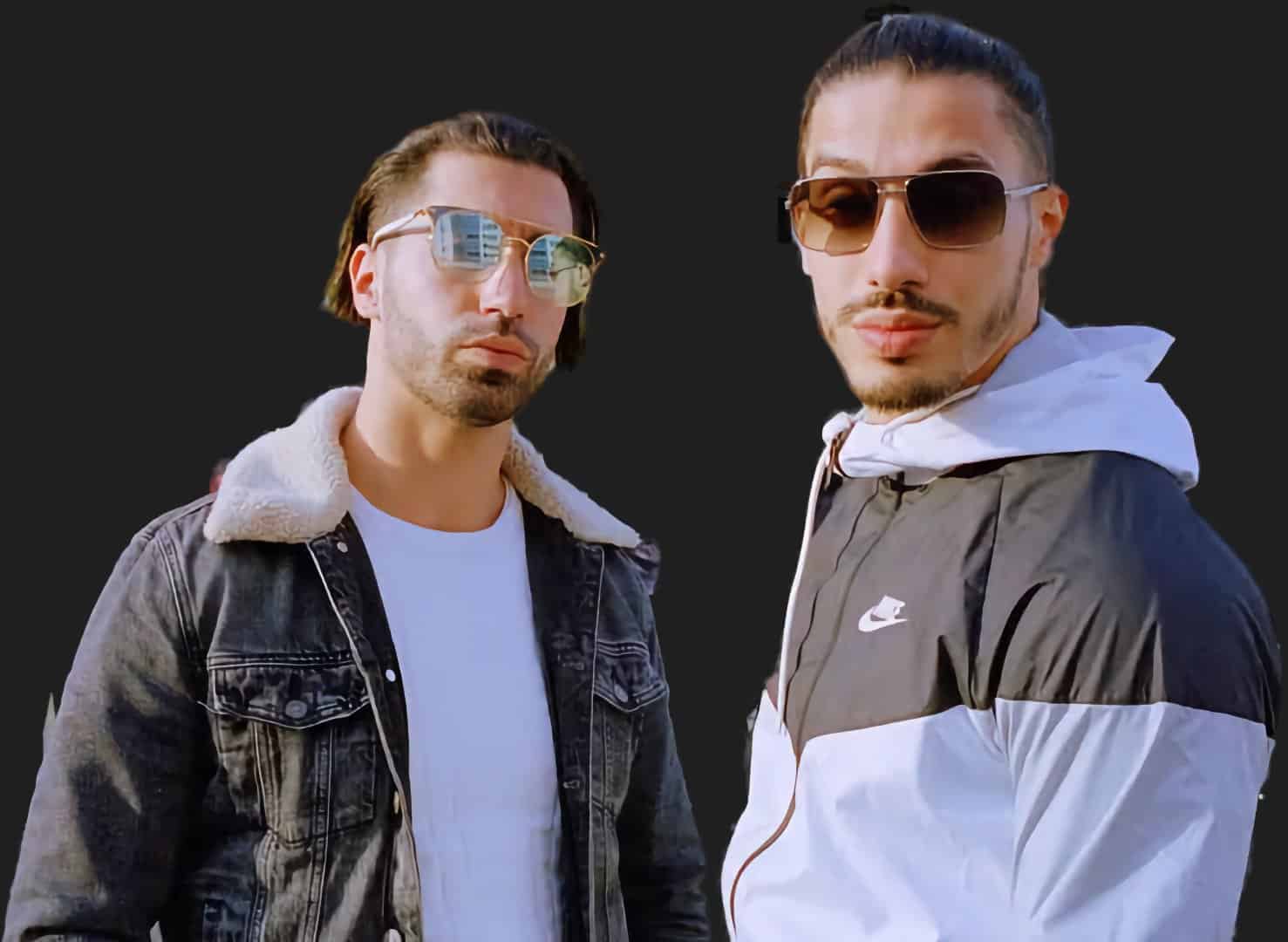
The two NLP brothers. We are looking forward to a new album from 2019.
by Claudio Sid Brignole
French rap has established itself as a dominant cultural force, positioning France as the world's second largest market for Hip Hop after the United States.
This success is not accidental, but the result of decades of evolution, a deep connection with the social and cultural realities of the country, and unique institutional support. We at Aelle have, since the 1990s, had an eye for the French scene because we understood that our cousins were really good and with tons of style. We were also the first to dedicate a cover to French rap with Oxmo Puccino, a now historical figure in transalpine rap with issue No. 31 in October 1998.
It may also be because I used to go to Nice a lot at the time to discover new French rap records at Fnac (I liked Rocca, a French-Colombian MC, quite a lot), buy magazines (Radikal above all, very similar to Aelle) and listen to SkyRock in the car, all only 2 1/2 hours from Genoa where I lived at the time. France in those years seemed to me light years ahead of Italy. Over the years the gap has narrowed but there is no doubt that even now they are number one in Europe. Considering that in Italy we now have artists who qualitatively are on the same level as the best French ones (but far fewer in number), let us take this fact to do even better and try to get closer and closer. Now let's briefly go over the history of French rap up to the present day aware that if we really mentioned all the key MCs the article would become an encyclopedia, so anticipating that some important names will be left out, let's go back to the 1980s.
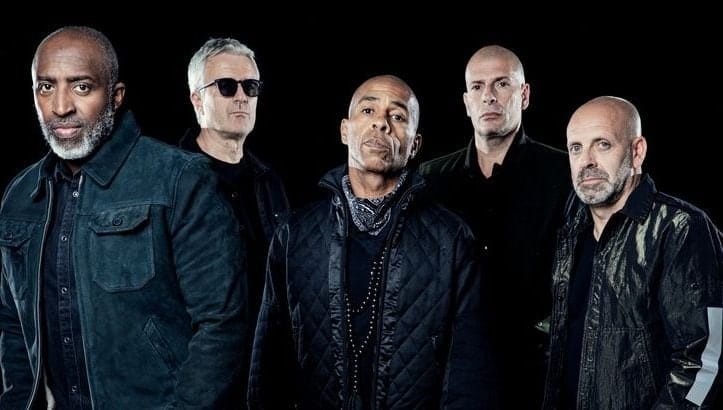
IAM Marseillais in a recent image
Pioneers like MC Solaar and IAM began experimenting with the genre shortly after it first exploded in the United States, adapting it to the French language and culture. MC Solaar, in particular, is considered one of the founding fathers of French rap. In an interview, he said, “When I started, rap in France was practically nonexistent. We had to create everything from scratch, finding a way to make rhymes work in French and talk about our realities.”
The Marseille-based group IAM brought a unique perspective, mixing Mediterranean and Middle Eastern influences with Hip Hop. Akhenaton, a member of the group, said, “We wanted to create rap that spoke about our city, our origins, our frustrations. We didn't want to just copy America, but to find our own voice.”
In the 1990s, French rap experienced an explosion, with the emergence of groups such as Suprême NTM that brought a harder, more politically charged approach. JoeyStarr of Suprême NTM said in an interview, ’Our rap was a cry of rage against the system. We wanted to shake French society, make it see the realities it preferred to ignore.“
A key element in the success of French rap has been its ability to give voice to marginalized communities, particularly those of immigrant origin in the banlieues. Kery James, a rapper of Haitian descent, explained, “Rap became the voice of those who had no voice. We used music to tell our stories, our struggles, our hopes.”
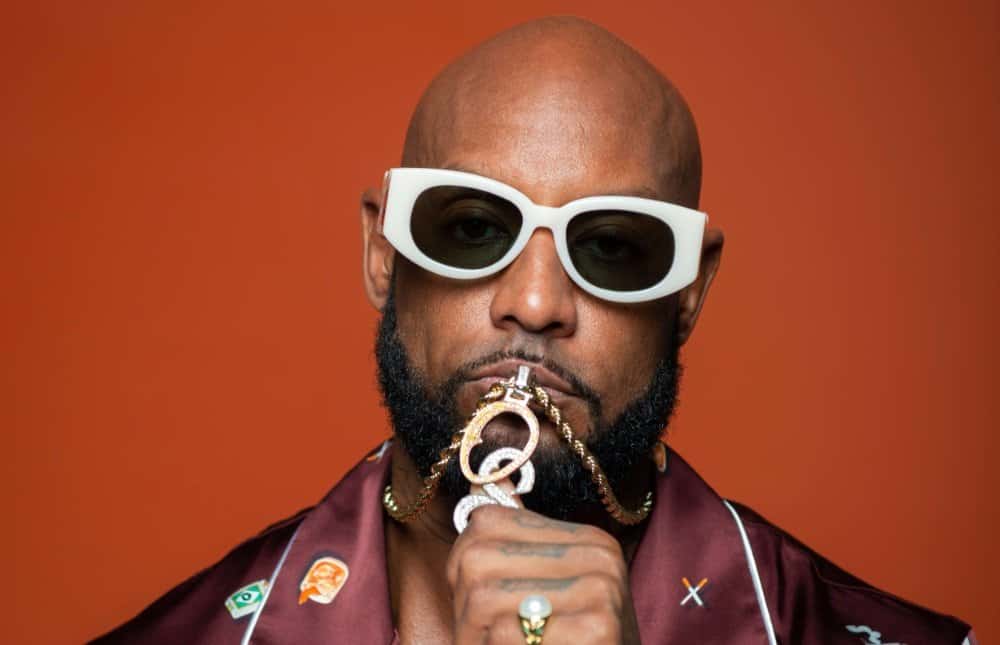
Booba
Linguistic diversity is another key aspect of French rap. Many artists incorporate argot, verlan (a type of slang that reverses the syllables of words), and words from languages such as Arabic or Wolof into their rhymes. Booba, one of the most influential rappers of the past two decades, say a French Gué, said, “Our language is a reflection of our multicultural reality. We mix languages and dialects because that's how we talk in the streets.” Booba's career began in the 1990s with the group Lunatic, but it was as a solo artist that Booba achieved fame. His debut album, ’Temps mort“ (2002), immediately positioned him as a unique voice in the French rap scene. Known for his raw and direct style, Booba developed a distinctive flow and lyrics that mixed arrogance, street credibility, and references to popular culture. Booba has also distinguished himself for his entrepreneurial skills, founding his own 92i record label and launching several clothing brands. His influence extends far beyond music, becoming a style icon and role model for many young people in the French banlieues. However, Booba's career has also been marked by numerous controversies and feuds with other French rappers, particularly Kaaris-as they say, all the world is a country.
French rap has also addressed social and political issues directly. Médine, known for his provocative lyrics, said, “Rap has to be a mirror of society, even when the image it reflects is not pleasant. Our job is to tell the truth, no matter how uncomfortable it may be.”
In recent years, French rap has continued to evolve, embracing new styles such as trap and drill. Part of this new wave are PNL (an acronym for Peace N’ Lovés, which means “peace and money” in argot), a French-Algerian rap duo composed of brothers Ademo (Tarik Andrieu) and N.O.S. (Nabil Andrieu) who have revolutionized the scene with their “cloud rap” style, a unique genre that is very smooth but which they do not like to define precisely: “We don't like to label our music. We create an atmosphere, a sound universe that reflects our inner world.” PNL are among the few French musicians who have also enjoyed some success in Italy but without ever reaching the mainstream. Hailing from the Les Tarterêts neighborhood of Corbeil-Essonnes in the Île-de-France region, PNL rose to fame in 2015 with the video for “Le Monde ou Rien,” shot at the Vele di Scampia in Naples. This track, included on their debut album “Le Monde Chico,” has become an anthem for French youth movements against injustice in the banlieues. NLP distinguished themselves by their artistic independence, refusing contracts with major record labels and media interviews. The duo's success grew rapidly: their second album “Dans la Légende” (2016) achieved diamond status, while “Deux Frères” (2019) solidified their leading position in French rap. Also famous for their innovative videos, NLP made headlines by shooting the video for “Au DD” on top of the Eiffel Tower. It is currently since 2019 that they have not released an album, only releasing a single “Gaza” in late 2023.
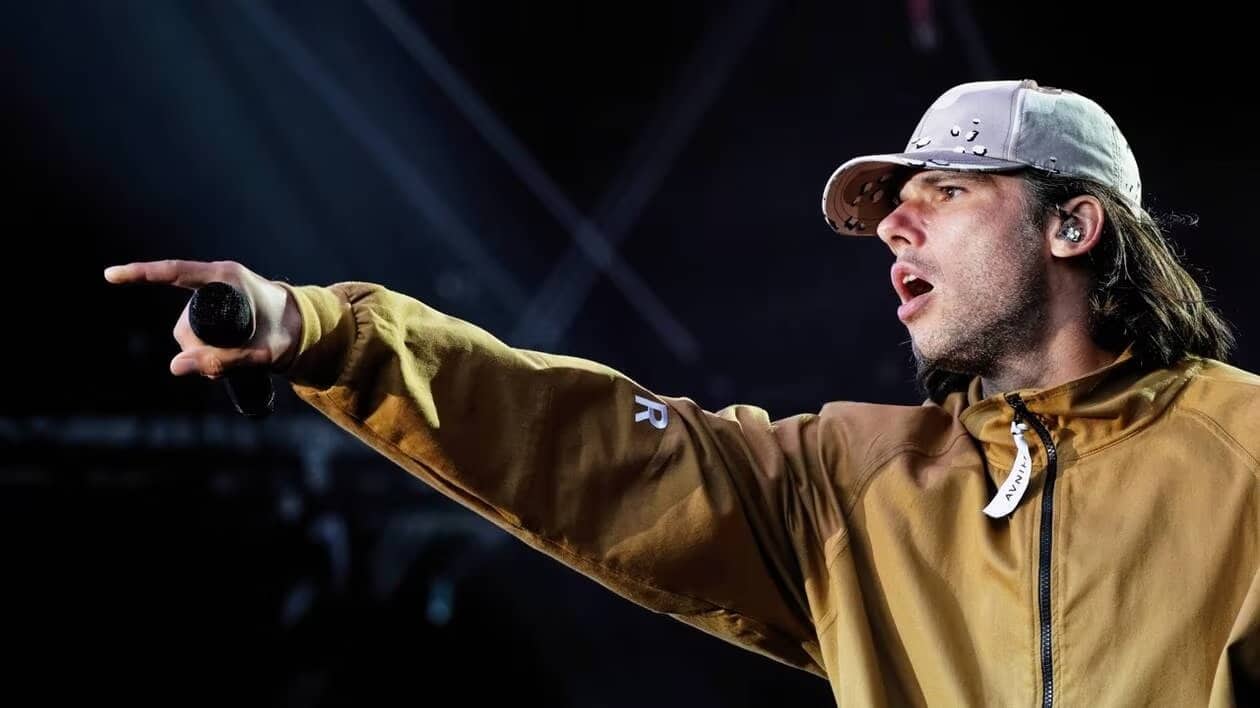
Orelsan
Orelsan, one of the most popular artists in recent years, has brought French rap to an even wider audience. He said, “Rap is no longer a niche genre. It has become the soundtrack of contemporary France, capable of speaking to all generations. ”His unique style blends elements of Hip Hop, electronica and pop, featuring introspective lyrics that address issues such as love, relationships and social issues. Orelsan is known for his deft use of humor and irony mixed with more serious themes, which has allowed him to reach a multigenerational audience far beyond the confines of hardcore rap. His debut album, “Perdu d'avance,” was released in 2009, but it was with his third album, “La fête est finie,” in 2017 that Orelsan achieved consecration, achieving double diamond status with more than one million copies sold in France. His latest album, “Civilisation,” released in 2021, dominated the French charts for two consecutive years. In addition to his solo career, Orelsan is a member of the duo Casseurs Flowters together with his colleague Gringe. His artistic versatility also extends to film, having directed and acted in several films. To say, in 2022, he was named a Chevalier des Arts et des Lettres by the French Ministry of Culture, a testament to his significant contribution to French and world culture, a demonstration of how rap has reached even the highest institutions.
A crucial factor in the success of French rap has been the law on the quota of national music on radio stations. Since 1994, French radio stations have been obliged to broadcast at least 40% of French-language music during peak listening hours. This legislation, known as the “Toubon law,” has given a major boost to local music production, including rap.
In this context, radio stations like Skyrock played a key role. Skyrock, born in 1986 as a rock radio station, converted to rap and R&B in the early 1990s (never understood why they did not change the name to Skyrap), becoming the leading radio platform for French Hip Hop. With its slogan ’Premier sur le rap“ (First on rap), Skyrock contributed greatly to the spread and popularity of the genre in France.
Comparing French rap with Italian rap, both differences and commonalities emerge. French rap has benefited from stronger institutional support, thanks to the radio quota law, which has allowed for greater visibility and growth of the genre. The social aspect also initially created a furrow between the two nations; multiculturalism has been a reality in France for decades earlier than in Italy where second generations are only appearing on the scene in recent years. Hip Hop In Italy, had to struggle longer to gain mainstream recognition, radio stations for decades practically ignored rap broadcasting only a few of the catchy tracks and relegating Hip Hop to “ghetto” programs where it was broadcast 1 hour a week.
However, both scenes now share common themes such as the narrative of life in the suburbs and the search for identity in multicultural contexts and also, unfortunately, a flattening of content in lyrics that have become less committed over the years. In both France and Italy, rap has nonetheless become the voice of a generation that often feels marginalized and misunderstood and that externalizes this both with the usual stereotypes about the ostentation of wealth and with deeper concepts that are, however, increasingly relegated to the underground scene, which is thriving in both nations.
Collaborations between Italian and French rappers have been several over the years although there could have been much more given the geographical proximity. However, the language barrier remains an obstacle. Recently the wave of Italian-Maghreb rappers who have French as one of their mother tongues could help a more substantial exchange between the French and Italian scenes.
An interesting trend has developed in Italian rap in recent years, with some artists beginning to incorporate French into their lyrics, creating a unique linguistic mix. This phenomenon reflects the cultural influences and origins of many second-generation rappers in Italy.
Ghali is one of the pioneers of this trend. Of Tunisian descent, Ghali often incorporates French and Arabic phrases into his Italian lyrics. His collaboration with French rapper Lacrim on the 2017 track “Tristi” is a perfect example of this language fusion. Also, in 2020 he collaborated with Soolking, an Algerian rapper who sings in French, for the track “Jennifer,” where Italian, French, and Arabic are mixed. Sfera Ebbasta, has demonstrated his linguistic versatility by collaborating with French-speaking artists. He participated in the remix of “Djomb” by French rapper Bosh, where he rapped in both Italian and French; he also collaborated with Kalash on the track “Mwaka Moon (Remix). Baby Gang, a rapper of Moroccan descent, often incorporates French and Arabic phrases into his lyrics. His music strongly reflects the atmosphere of the French banlieues, creating a bridge between the two realities. Capo Plaza has shown his skill with the French language in collaborations such as “Pookie Remix” with Aya Nakamura and “Billets” with Ninho, proving his credibility in the French-speaking rap scene. In 2018 Tedua collaborated with Sofiane on the single “Fashion Week RMX,” and Baby Gang also made a track with him, “Blitz 2.”.
Separate discussion deserves Speranza, an Italian-French rapper who embodies the fusion of the Hip Hop cultures of the two countries. An Italian father and French mother, he grew up in France before moving to Caserta. His uniqueness lies in the linguistic mix he uses in his tracks, combining Neapolitan, French, Italian and Gypsy dialect. Starting his musical career at age 34 after working as a bricklayer, Speranza brings an authenticity rooted in life experience to his lyrics. His style combines the energy of French rap with the melodicity of Neapolitan tradition, creating a musical bridge between the two cultures.
A small note also regarding Hip Hop information. After Aelle closed down, along came Groove, a magazine that was the Italian edition of a French one of which it kept some interviews and articles as well as the graphics (initially I had done a different graphic design keeping only the name but then the French forced us to use their design which I wasn't very enthusiastic about). In the Italian team besides me, just for the design, there was also Rido and Andrea Paoli.
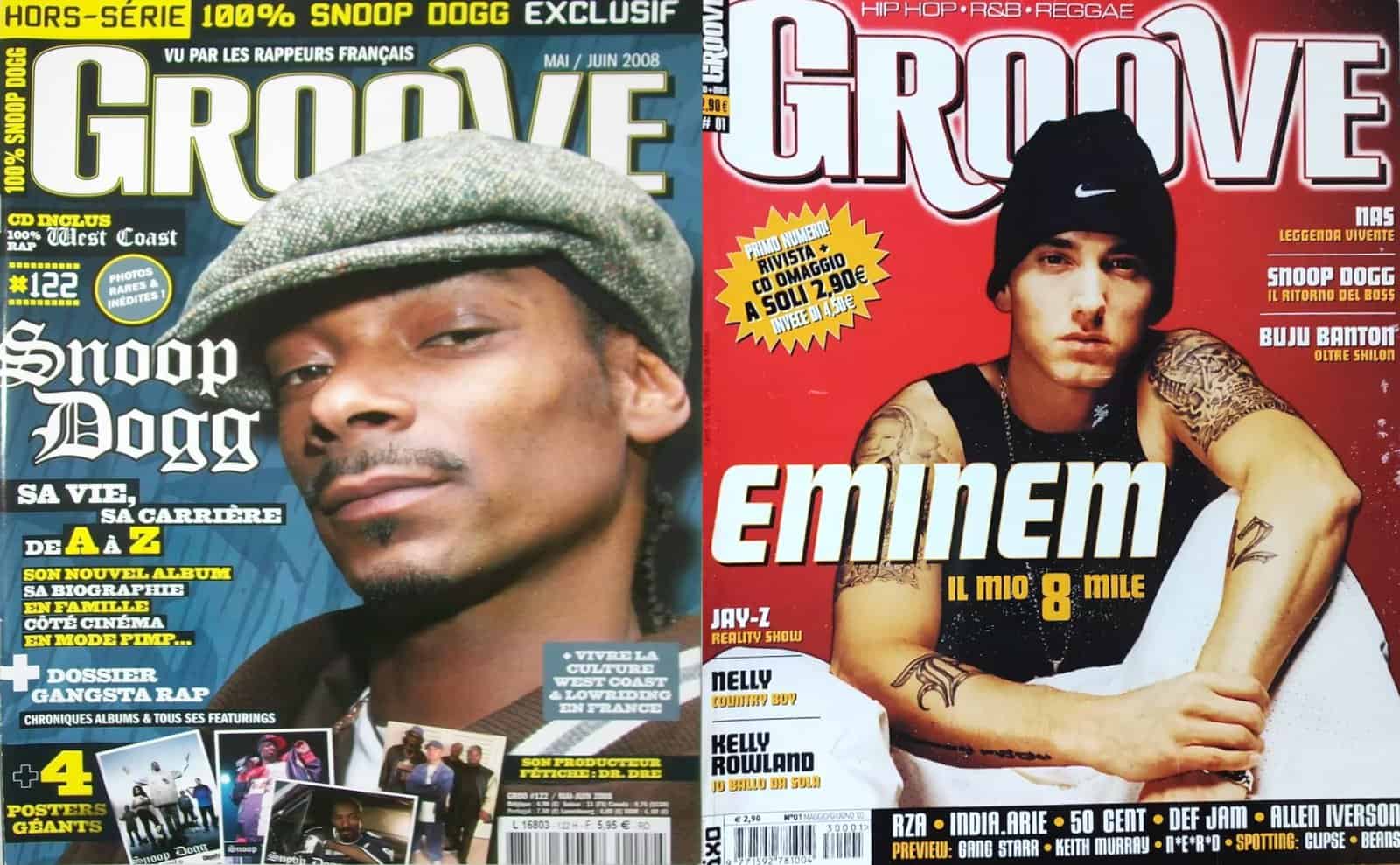
Groove, left French edition, right Italian edition
Groove, left French edition, right Italian edition
Despite its enormous commercial success, French rap continues to maintain strong ties to its underground roots and its spirit of contestation. As Nekfeu put it, “Success should not make us forget where we came from and why we started rap. Our mission is always to give a voice to those who don't have one.”
French rap has become much more than a musical genre: it is a powerful means of cultural expression, a vehicle for social change, and a reflection of contemporary France in all its complexity and diversity. As Youssoupha summarized, “French rap is the voice of France today, with all its contradictions, challenges, and hopes. It is our story, told in our own words and rhythms.”
JOIN THE PRIORITY LIST
Break boundaries
Break boundaries


 Italian
 English