BREAKING AT THE OLYMPICS: HOW IT WENT AND WHAT HAPPENS NOW
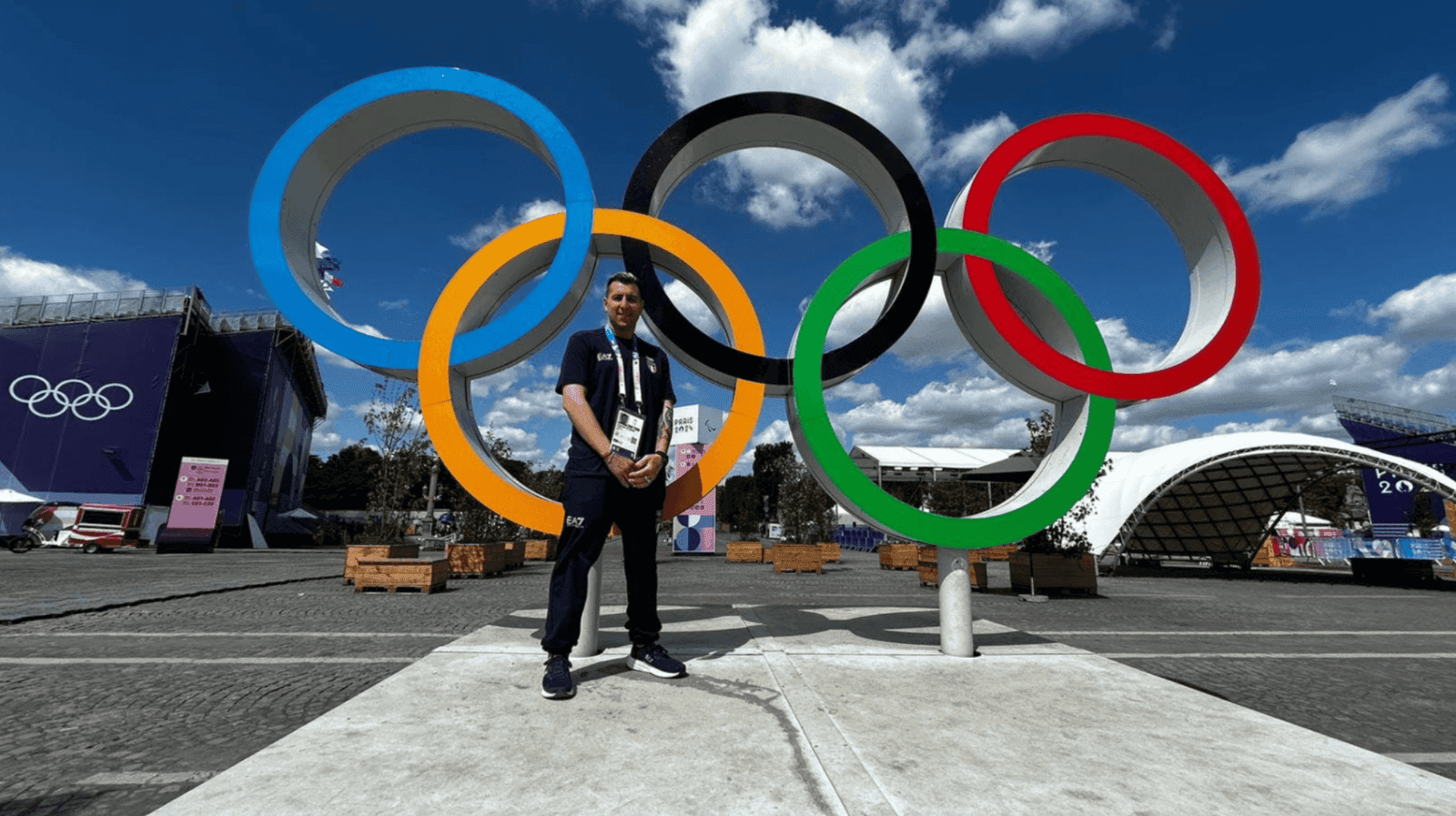
LET'S HEAR HOW IT WENT FROM KACYO, TECHNICIAN OF THE ITALIAN NATIONAL TEAM
-
By Claudio Sid Brignole
-
At the Paris 2024 Olympics, breaking made its official debut as an Olympic discipline. The competition was held in two categories: male and female, with 16 B-Girls and 16 B-Boys arriving in Paris through a long selection process. For Italy, among the B-Girls was Antilai Sandrini, known as B-Girl Anti, while there was no Italian B-Boy among those ranked to go to Paris. In the Olympic competition, Anti had 2 losses and 1 victory, demonstrating the competitive level reached by Italian breaking on the international scene. Although she failed to get a medal, she showed all her abilities and as Italians we will always remain proud that she represented us at the Olympics.
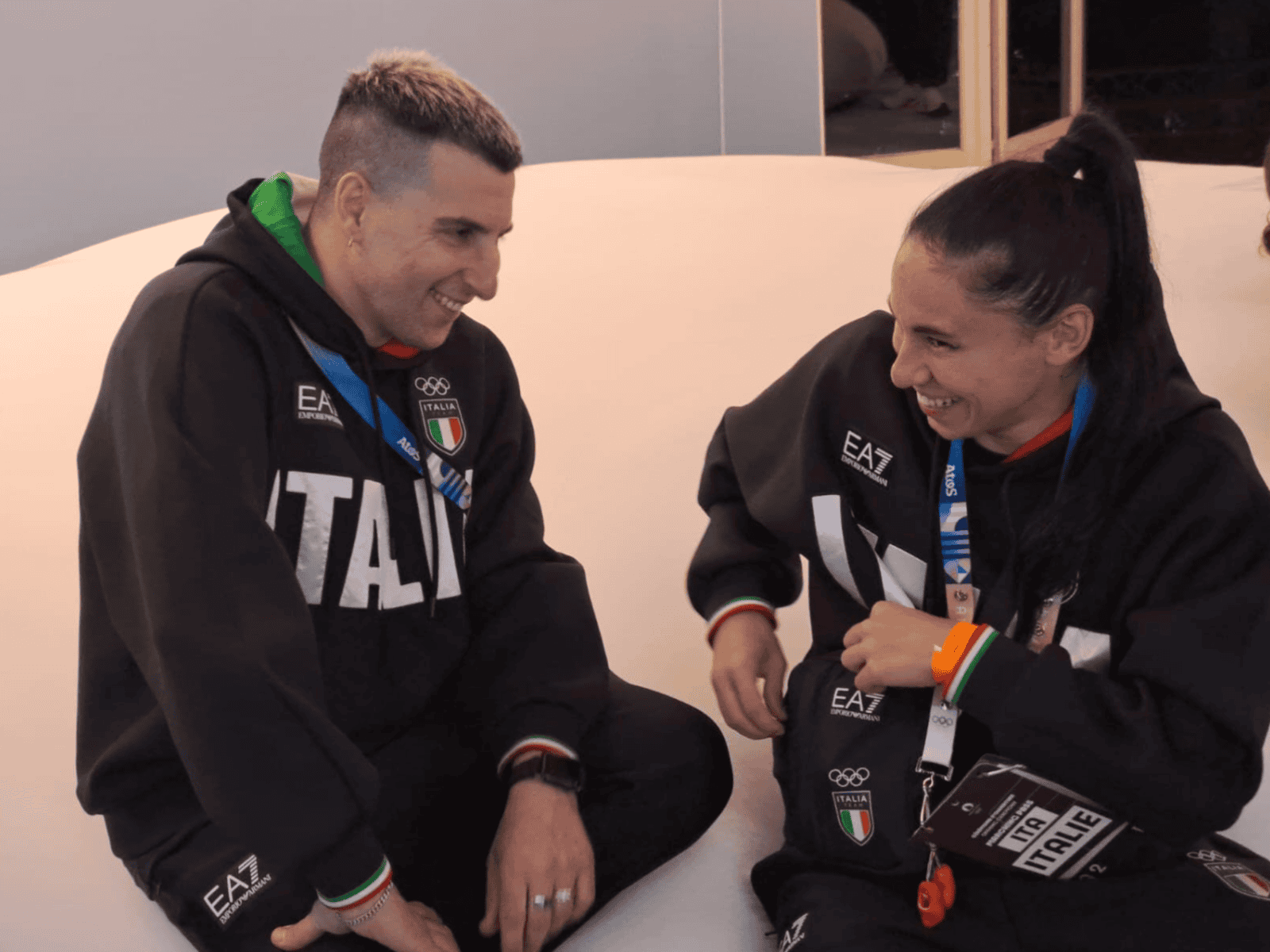
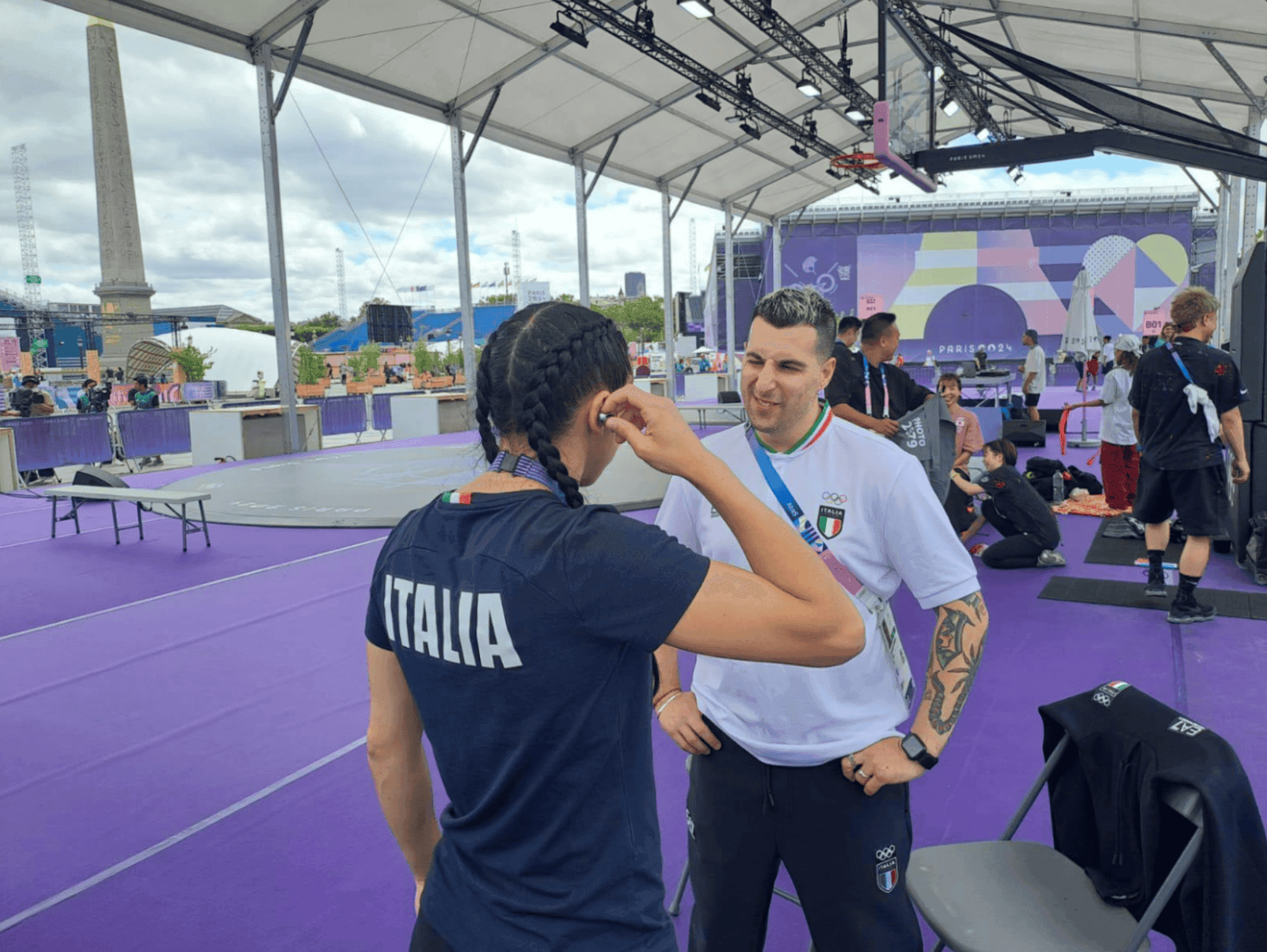
Technician of the Italian national breaking team is Giuseppe Di Mauro, known to everyone as Kacyo, who was also present in Paris. We asked him about the long journey to the Olympics made with Antilai: “Antilai I met her through breaking and, between ups and downs, we grew together. Thanks to her work done with her team and mine, we brought, I think, the best of what we could do. Antilai is a great person, sunny, he has been on a beautiful path. He brought there his essence, his way of being, his way of dancing, and beyond the ‘we are in, we are out,’ we were there to represent, to bring just the Italian essence and I am very proud of that. One thing I will always carry with me is how she closed the last challenge. She turned to me and I made her a little heart, she danced it, did it again, put it on her chest and then gave it to the audience. This thing here for me ended the Olympics on a high note. Giving love I think is the most beautiful thing and she gave it. We're all proud of her and I'm so happy with what was created.”
-
Anti wins the last battle (Eurosport video)
Kacyo, who just returned from Paris, tells us what this unique experience was like: “I think the battles themselves had a stratospheric level, both in the women's and men's. In the two years of going through Paris, you could see the perseverance, training and determination of every single dancer. There were some epic challenges, of a truly superior level. It was all fantastic, with wonderful energy. The organizers of Paris 2024 recreated a fantastic venue, with more than 6,000 seats. They put this central circle, a raised stage with all the people around it, the DJ at the top, the stands around it. They recreated the atmosphere, that arena, that circle, and I think it was really epic. The organizers thought of every single detail, and that was the key to the success of the event. One thing I was pleased with was the music. They used to only put on break beats at these circuits, but the Olympics and the organization unlocked the rights, so there was music ranging from funk, to Latin funk, to rap, to break beats. The DJs really ranged a lot, and that's also why the dancers had total freedom of expression. Between the music, that atmosphere, the level of the dancers, I think it was a unique Olympics-obviously it's also been the only Olympics so far-but it really created the event. Maybe it couldn't have been better, I'm really impressed with the level.” Returning to the actual competition, for the B-girls the gold medal was won by Japan's Ami, who beat Lithuania's Nicka in the final. The bronze medal went to China's 671. In the men's competition, Canada's Phil Wizard took the gold, beating France's Dany Dann who won the silver. The bronze medal was won by Victor of the United States. The fact that, apart from a bronze for the U.S., medals went to many other countries speaks volumes about how far breaking has expanded and established itself in the world.
-
-
The inclusion of breaking in the Olympics elicited mixed reactions within the community. On the one hand, it offered greater visibility and recognition for the discipline, potentially expanding the practitioner base. On the other, concerns have emerged about the possible loss of authenticity and spontaneity of street culture, the risk of excessive standardization, and the difficulties in objectively evaluating such an expressive art form. In fact, breaking has become a discipline in which there have already been breakers who can be called professionals for years, national and international championships, competitions with big sponsors such as Nike, Red Bull, Snipes, so the days with only linoleum on the street are long gone. You definitely still start out that way, but by persevering you can get to international levels by entering circuits that are growing more and more every year.
-
-
Kacyo has his own thoughts about whether or not breaking is appropriate for the Olympics: “What we brought to the Olympics is a strong community, freedom of expression, brotherhood. These are unique values that breaking has brought to this event. I am convinced that sports, being together, doing something you enjoy and sharing with the rest of the world, is one of the most suitable contexts where we can bring our discipline. We gave entertainment, culture, happiness. The dancers around me were really happy, I breathed a fantastic air, and I think it is right to continue and not stop. I can already anticipate that the International Federation will not stop the circuit. We are now preparing for 2025 with the World Games, which is like the Olympics and is every 4 years. In 2026 we will have the Youth Olympics in Dakar, and in 2027, if all goes well, confirmation should come for the 2032 Olympics. The International Federation has already expressed this opinion: it will not stop and will continue to push in this circuit.” In Los Angeles 2028 breaking will not be there, but it could become a stable Olympic discipline starting in Brisbane 2032. Thanks to Anti, Italian breaking has remained in the spotlight, and in the coming years we expect the Italian school to make its mark. Who better to glimpse the future than Kacyo, coach of the Italian breaking team: “Now that we have closed this chapter of Paris 2024, we will open others. If within 2-3 years the b-boys on the world stage have raised their level so much, now it's just the beginning for young people to raise theirs. I think we're going to see some great things in Dakar 2026 and we as Italy will be there, we're in because of Anti's result, but also because of the investment we make every day in the whole Italian scene. We are growing really strong talents and now it's just a matter of structuring a work and carrying it forward to always try to grow and give our best.”
-
BECAUSE RAYGUN HAS BEEN A MAJOR IMAGE DAMAGE TO THE BREAKING MOVEMENT.
Raygun's performance at the Paris 2024 Olympics unleashed a media storm, highlighting the challenges and contradictions of the inclusion of breaking in the Olympic context as well as overshadowing all the incredible performances of the other B-girls and B-boys in attendance. Of course, here we do not want to sidle up to the “shit storm” she has had to endure in recent days, which we strongly condemn, but there is also no doubt that her controversial “kangaroo dance” has raised questions about the nature of creativity in breaking and respect for its culture and history. Raygun, whose real name is Rachael Gunn, is 35 years old, a considerable age for a competition of this level. Her performance, which deviated significantly from the traditional style of breaking, seems to have been a choice dictated more by necessity than pure artistic expression. “I could never beat these girls at what they do best-their power moves,” Gunn admitted, indirectly revealing the limitations of her technique compared to the younger, better-prepared competitors. While Gunn defended her performance by stating, “All my moves are original. Creativity is really important to me,” one has to wonder if this interpretation of creativity is in line with the basic principles of breaking. The discipline, born on the streets of the Bronx in the 1970s, has a rich history and tradition that deserves respect and consideration, especially on a global stage like the Olympics. The incident has reignited fears that the inclusion of breaking in the Olympics could lead to a distortion of the discipline away from its roots and core values.
-
Raygun's performance, while original, raised questions about his ability to authentically represent the breaking culture. Martin Gilian, chief judge of the competition, defended Gunn, but his statement that “breaking is about originality and bringing something new” seems to overlook the importance of maintaining a link to the established tradition and technique of the discipline. Perhaps this is also why Raygun was still awarded zero points by the judges. The fact is that Raygun should not have been in the Olympics, she was not up to it as she herself admitted. This episode highlighted the need for a balance between innovation and respect for the culture of breaking. While creativity is key, it should build on tradition rather than move away from it completely. Raygun's performance, while original, seems to have missed this balance, resulting more in a deviation than an evolution of the discipline. The future of Olympic breaking will depend on the ability to strike a balance between the artistic integrity of the discipline, respect for its history and culture, and the demands of global sports competition. The Raygun incident underscores the importance of increased education of the public, the media, and the participants themselves about the culture and values of breaking to ensure that future performances can be both innovative and respectful of the rich tradition of this art form.
JOIN THE PRIORITY LIST
Style is freedom


 Italian
  English