Sacred Schools > on a mission.
By Vez
AL 48 July - August 2000
Second round, second meeting...
this time some ʻgood-time bastardʼ thought it best to swipe my bag at Aquatica on the occasion of Bambaataaʼs arrival-what does that have to do with anything!? Everything has a meaning in life, maybe even the fact of recapping with the Sacred Schoolsʼ three mcʼs for the second time in two days and redoing an interview that has already been done and that now maybe someone will be listening to on my nice walkman. Moral: never leave a backpack in the car when going to a concert, better to keep it on your shoulders. So here we all are again, ready to pretend weʼve never met before!
You were telling me about your features in various compiles, albums, tapes, etc., etc., how did you come to the conception of the EP in question and what are your expectations about it?
Dargen: “In the time frame in which we made the various participations we were talking about precisely (“Mission Impossible,” “50 Mc's” and others), there was already the idea of the ep, the work in fact comes out with ONE YEAR LATE... unfortunately... take into account that when we came up with the idea, in Italy the ep was not so inflated: it was an ep... ical enterprise.”
Fame: “The desire was still to first make ourselves known with a product that was completely our own. Even if a minimal one, between freestyles, challenges and participations people have already heard of us and this was the time to appear in an official form.”
Dargen: “We might as well have given up releasing it given the thousand vicissitudes we faced, but out of the respect we all three have for the pieces in question, they couldn't stay in the drawer or even end up on an eventual album. It's old in the sense of long in the making, but we believe very current and competitive metrically... especially for Italy: sometimes new things come out that already sound old...’
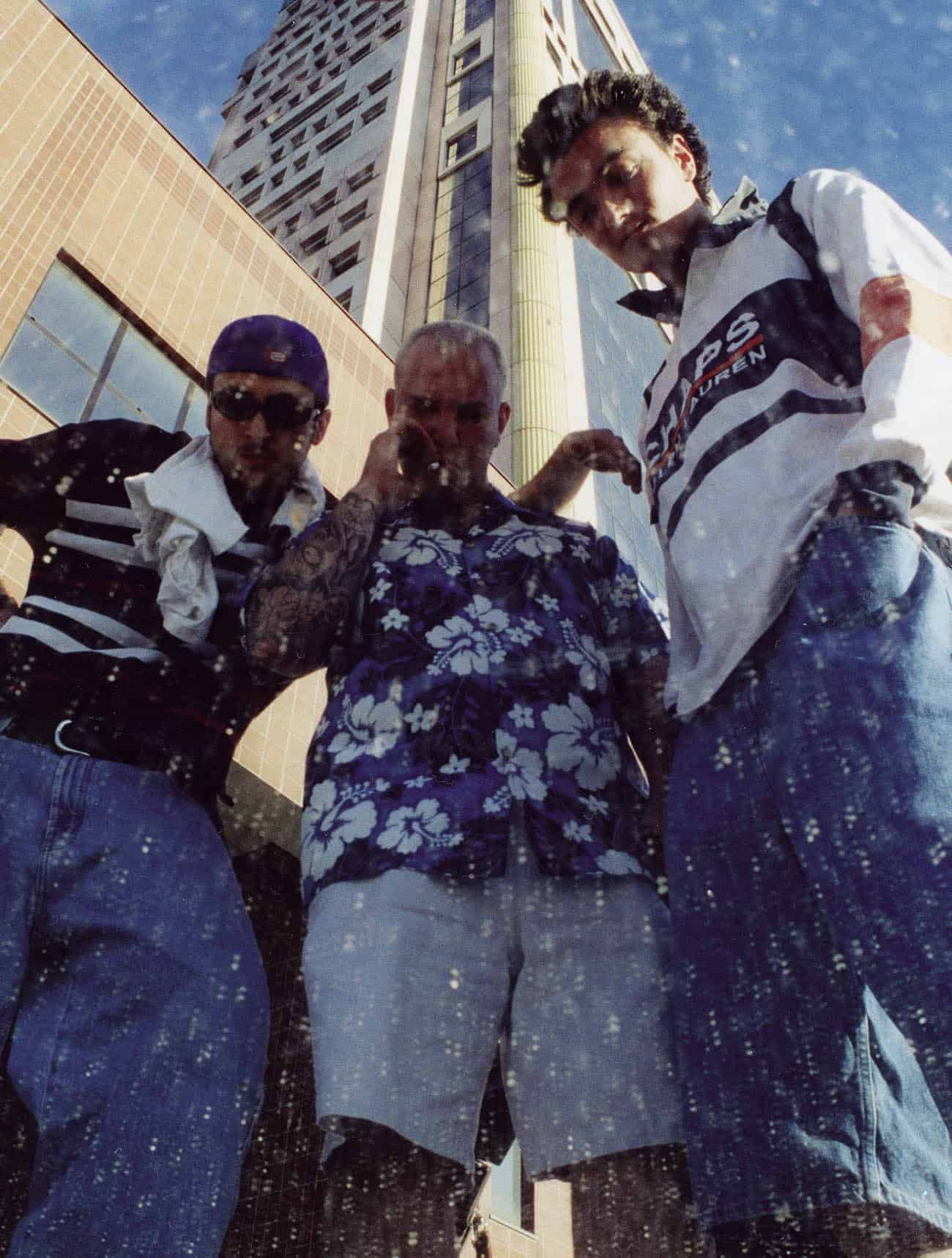
From the very title “3 Mc Al Cubo,” the idea I got was that it was an individual project in order to best focus on your three different personalities.
Dargen: “You're a little bit wrong: look at us as the same person looked at from three different points of view. Each definitely with their own strong personality, but the same goals.’
Hunger: “A same ‘mission’ I would say: that of combining rhymes and metrics with content, using different formulas and languages.”
In this regard, the three skits where each of you express yourselves individually are indicative; tell them in brief.
Guercio: “The three skits more than skits are short pieces. Mine is called “Cronache Di Regime,” and it deals with a topic that may not be brand new, that of Big Brother, of society constantly under control, but which I felt like telling both because of my fondness for films like “1984,” and because of private events concerning the police and my relationship with the authorities... the whole thing runs on a sample of a Japanese cartoon.”
Dargen: “I had a thing about using a loop that wasn't straight, that didn't even turn in 4/4 and on that then drop the rhymes. You may have noticed how difficult it is to follow the tempo of the whole thing, since there is not even a reference beat, I wanted it not to be a traditional way of rapping. I wanted it not to be the words laying on the base but the other way around...”
Fame: “Mine is ignorant...actually very ignorant...I had to break up this whole ep culture. It's an attack skit with some phrases sampled from Once Were Warriors. I don't think it needs explanation, classic in its genre.’
Aggressiveness plays a very strong role in your style, what does it stem from?
Owl: “We probably are, but only verbally! Ha ha ha. It probably all stems from one's personal background outside of Hip Hop as well. I think someone who lives in a big metropolis, like Milan can be, definitely has a different way of experiencing Hip Hop than someone who lives in the province or in a small town. Here there is stress, traffic ... you are constantly under pressure even outside the purely competitive sphere of rap. People who talk about the dangers of the ‘road’ and live in a small town just make us smile. I don't mean that there is no fotta and talent outside the city, but the experiences and input here are stronger.”
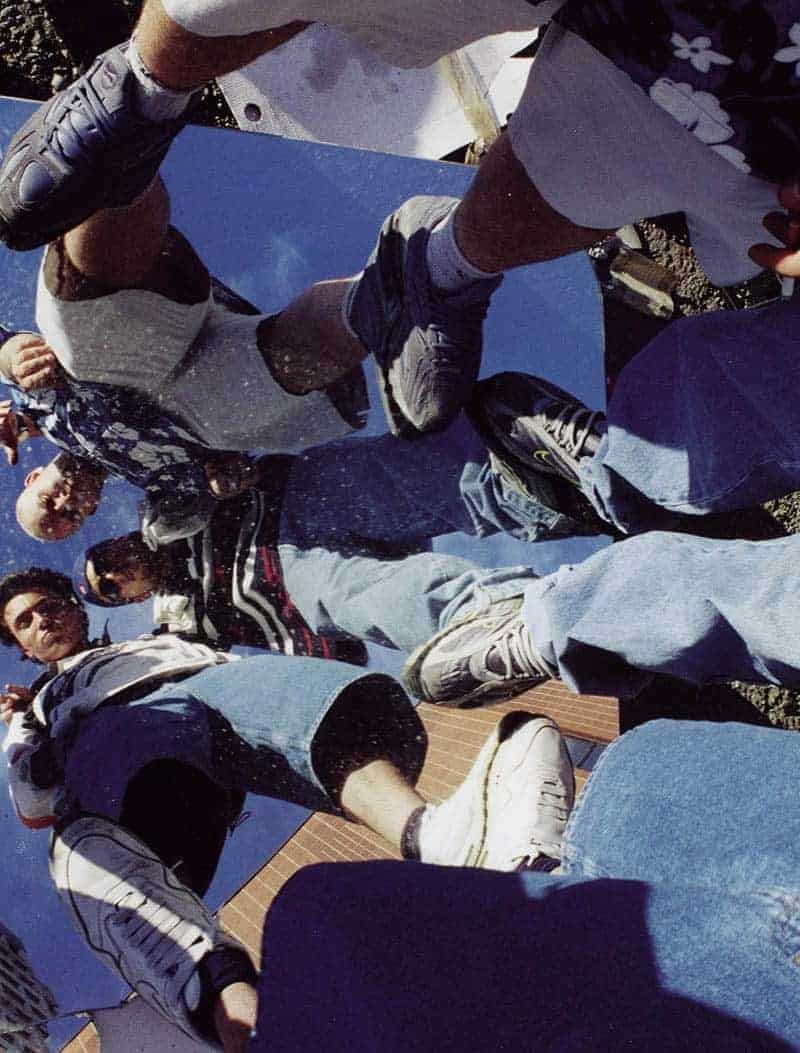
Look at us as the same person looked at from three different points of view.
However, there is a strong correlation in your songs between style and content, how do you reconcile the two?
Dargen: “In no way, for us they are the same thing. ”Guercio: “I see that rap is often criticized for lack of content...of course looking at many of the people who do it myself I wonder, ‘what the fuck content do they have to have?’”
Hunger: “For us, words play a fundamental role, with words you can do everything: make people smile, make people cry, make them spin their balls ... excite. They are then the only tool of an mc, so it would be too limiting to focus only on metrics, it is right to play with them and always find new formulas, new joints managing to say, to trigger something. There's even the lyrics of “The Unspoken Words” where we try to imagine a world of MUTE men!”
Speaking of texts, I have a few little things to ask you. In “The Razorʼs Edge,” you dispense criticism and commentary on the scene and not just following a classic attack cliché, I have jotted down a few things I would like to discuss with you.
Fame: “Yeah I guess, you want to ask me about the AL story (“All star inside AL but it's a matter of skin/ if the reviewer is your producer your record is skyrocketing,” nda)”
Given that this is our first meeting I would not, while trying not to spark unnecessary controversy, want you to walk out of here thinking that I am a rehash.
Fame: “It's a reference to some reviews, some even in your name! It's an equal opportunity issue, with positive exposure in the magazine someone thinks he's a phenomenon and maybe someone buys his records and then gets disappointed...’
Maybe one could listen before buying, it doesnʼt seem forbidden...letʼs go further anyway come on (hence a series of clarifications between yours truly and the group, inherent in the contradictory issue of reviews, their usefulness, impartiality, etc., etc.). Always you (Fame) then say “it has become impossible to recognize the false from the true,” how important is this issue?
Hunger: “It stems from life experiences, I have noticed how many people dispense smiles but then plot behind your back, people who instead without much fuss show you their consistency and fairness. This then also applies to artists, many good ones are not such good people and vice versa.”
On the other hand, I had some difficulty in understanding the meaning of “Critical Time,” can you explain to me properly what you were trying to express?
Dargen: “Maybe the lyrics are a bit cryptic, surreal. There is a continuous transition between reality and metaphor. It tells about the difficulty of each person in maintaining a contact between past-present-future. Fame grappled with the relationship between the most personal view of time, your lived experience, with the lessons that time itself leaves on you. Learn from the past to enhance the present. I, on the other hand, draw parallels between past and future understood as ’time itself,‘ with references to my own life. Highlighting the valence of time itself. Finally, Guercio emphasizes the use that is made in the real of time, referring for example to choices and their future implications.’
Quite complex but fascinating. You seem very satisfied with your lyrics, is that right?
Dargen: “Yes of course, this then is our favorite. In our lyrics you notice the fact that we are very competitive ... especially with each other ... and that turns out to be a weapon to our advantage. Each time we tend to outdo ourselves but also our partner. It's a constant stimulus to improve ourselves. Then you see a lot also depends on one's need to express oneself, each one of us wants it badly. It is such an intimate and personal need, it is part of my own way of being, my life. I think I should do it beyond doing rap or belonging to Hip Hop itself. Don't get me wrong: it's a simple concept... and if this freedom of expression belonged to Metal I would have done Heavy Metal...’
Here starts another river discussion of those that never seem to end but somehow help you understand, of those that we all do almost every day and are sometimes an inexhaustible source of energy. I still manage to wring out the usual greetings and thanks.Sacred Schools: “Chief & Zippo, Armata 16, Fat Gold, Milan Residence, T. T. M, Uncle, Space One, SAWO (R. I. P. the memory of a warrior never dies).”
JOIN THE PRIORITY LIST
Break boundaries

Break boundaries


 Italian
 English