SGAMO: ONE NATION UNDER A GROOVE
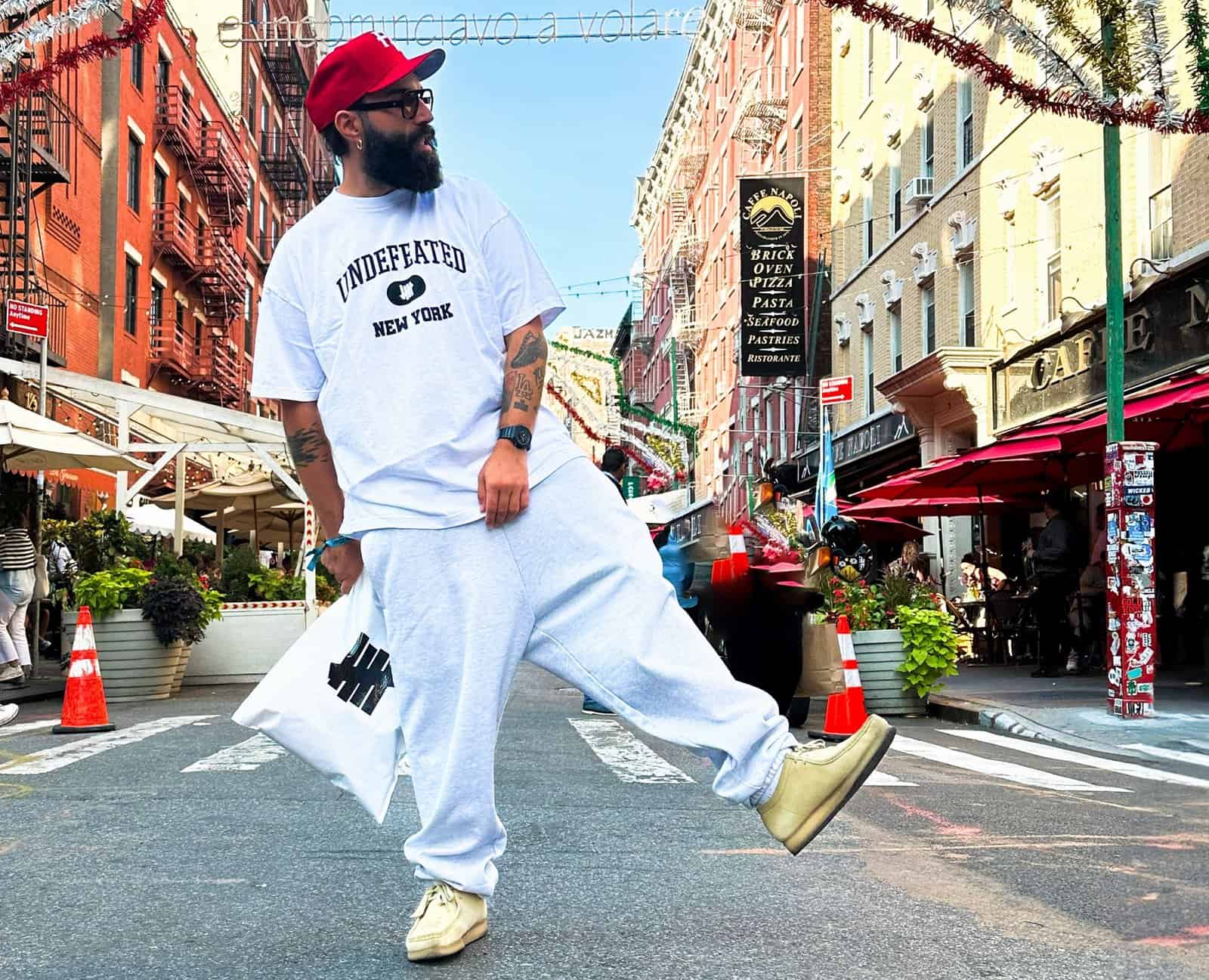
Photo @ Giulia Feleppa
From Bari to Asian dancefloors, a journey between intersecting cultures.
By Luca Mich aka @bettergosoul
Sometimes it happens that energy flows form in unpredictable ways and then simply cross. “Don't cross the streams,” said Peter Venkman in Ghostbusters one, and the reason why was rather obvious: an unmanageable and difficult-to-understand quantum wave could be unleashed, an other space in which ectoplasm, flesh-and-blood humans, sensory projections and all that was at stake at that moment of discovery in the early 1990s, when there were still few codes and juxtapositions were considered, rightly, for what they were: experiments.
For some, they were considered forbidden crossovers. Since then some streams have crossed for real in the music scene, in fashion, in urban crossovers, in subcultures in general, and the contours of the contaminations have been carefully redefined, sometimes losing their spontaneity, sometimes artificially reconstructing it.
For these are generative and powerful intersections when genuine, so much so that they attracted the attention even of us at Aelle, a channel that has been following and contributing to the storytelling and dissemination of Hip Hop culture since the early 1990s. For a series of circumstances and energies that converge (precisely), we have found ourselves crossing paths with the very people who have, on strict terms, moved away from that same culture, yes, but to broaden its boundaries: to include its vibes, revolutionary spirit, inclusivity tendency, innovation and, let's put it this way, even aesthetics, with all that comes with it in terms of hype-surfing, fashionista reference and even some threat of superficiality that flirts with riding on trend formulas.
And so Aelle today meets Sgamo, a DJ (and we will find out a lot more) of Bari origins, now based in Milan, but at home wherever in the world there are cultures to cross, dancefloors to contaminate, consoles to set on fire. Yes, because Alessandro Nuzzo is a soul on fire and has that attitude there, that Hip Hop attitude, which allows him to compose eclectic sets in which end up genres that, however far apart, are always based on two things: bass and drums.
Drum & Bass, (post) Dubstep, Footwork, Brazilian, Grime, Afrobeat, Hip Hop, re-edits, trap: all converge in frenzied sets that work for both big brand launch parties in metropolises and for the more refined clubbers, those who love genre contaminations, whether musical or human.
The flows between Aelle and Alessandro crossed paths in New York, yes, in the streets of the city of that Peter Venkman, thanks to the contact offered by Giulia Feleppa, a photographer from Bari now in the Big Apple, about whom you have already read if you follow our magazine. We then caught up with him by phone and email for a chat chock-full of quantum leaps, references to other cultures that become our own, of the innovative and contaminating spirit native to Hip Hop culture, and of comparisons between urban cultures around the world, from the Empire State to the Philippines, from Vietnam to Japan, even though it all started in Bari.
“I discovered rap when it was far from being what it is today, and I fell in love with it instantly. On the one hand, it was an escape from the challenging reality of my neighborhood, and on the other it offered me a way to talk about that same reality. Despite the difficulties at the time, rap allowed me to be understood by my peers and gave me a voice with older ones. This contrast is perhaps the first foundation on which my relationship with art and creativity rests. Every project I start today is the child of those initial emotions and beliefs, like a traveling companion that grows with me, always showing me new avenues to explore. I have gone through dark times, but I have always come out with new musical and ethical stimuli. My first trip to Malaysia, for example, where for the first time I was fascinated by the coexistence of different religious and ethnic communities, united in mutual influence while retaining their own identity. This experience has enriched me deeply, so much so that it is now not just about music, but an energy that I seek every day and that is now essential to me.”

There is that essence of early Hip Hop in proposing new and mixed music in international dancefloors: beats that are based on groove and bass culture, interweaving cultures, musical scenes and sounds that, kneaded together, reach even very important audiences. In Italy we have not yet had the opportunity to mix authentically with ethnicities and cultures integrated by migration; on the other hand, those who have the chance to emerge in the music scene from a young age often come from contexts that have not forced them to build from scratch. This creates, in a sense, a kind of parochialism that pushes the local industry in one direction. There is a rush to get on the same train, as if it is the only way to success, and this distracts from looking at what is happening fresh and innovative in the international music scene.
“Whenever a new sound emerges globally, what you can do is spend hours on the Internet trying to learn more about it. Research is never just an act of listening, but a way to connect with what is distant and unknown. Personally, I spent years researching from my bedroom, listening and discovering new musical worlds. Later, when I began to be able to afford it, I started making small trips to London to listen to my favorite artists in clubs, and more recently, I have ventured on longer trips, seeking deeper contact with local cultures.”
That then Hip Hop was born out of urgency: “Music has always been more than a passion. An urgency to express myself that I never imagined could turn into a career. The more time I spent listening to new music and immersing myself in the sounds, the more I was able to escape from a reality that felt cramped. So it came naturally to combine sounds that felt familiar, before they became a trend. Times were different, social was just starting out, so it's hard to compare my version of history to those who watched me grow up. But just a couple of months ago, I had the opportunity to have a party in Bari with my lifelong friends. And the result was that so many people who used to come to our parties almost 15 years ago came back. The feedback was clear that we were among the first to do certain things, and that goes beyond any little local rivalry. Certainly in Milan they had the cool graphics and the guests of a certain type, but I have no problem saying that even years later, with the various bands I worked with around Italy like Often, Hellheaven11, 095Hotline, Touch The Wood (and I'm definitely forgetting someone), we started a movement that spread everywhere, and if the music we played for years is known today, some credit goes to us as well.’
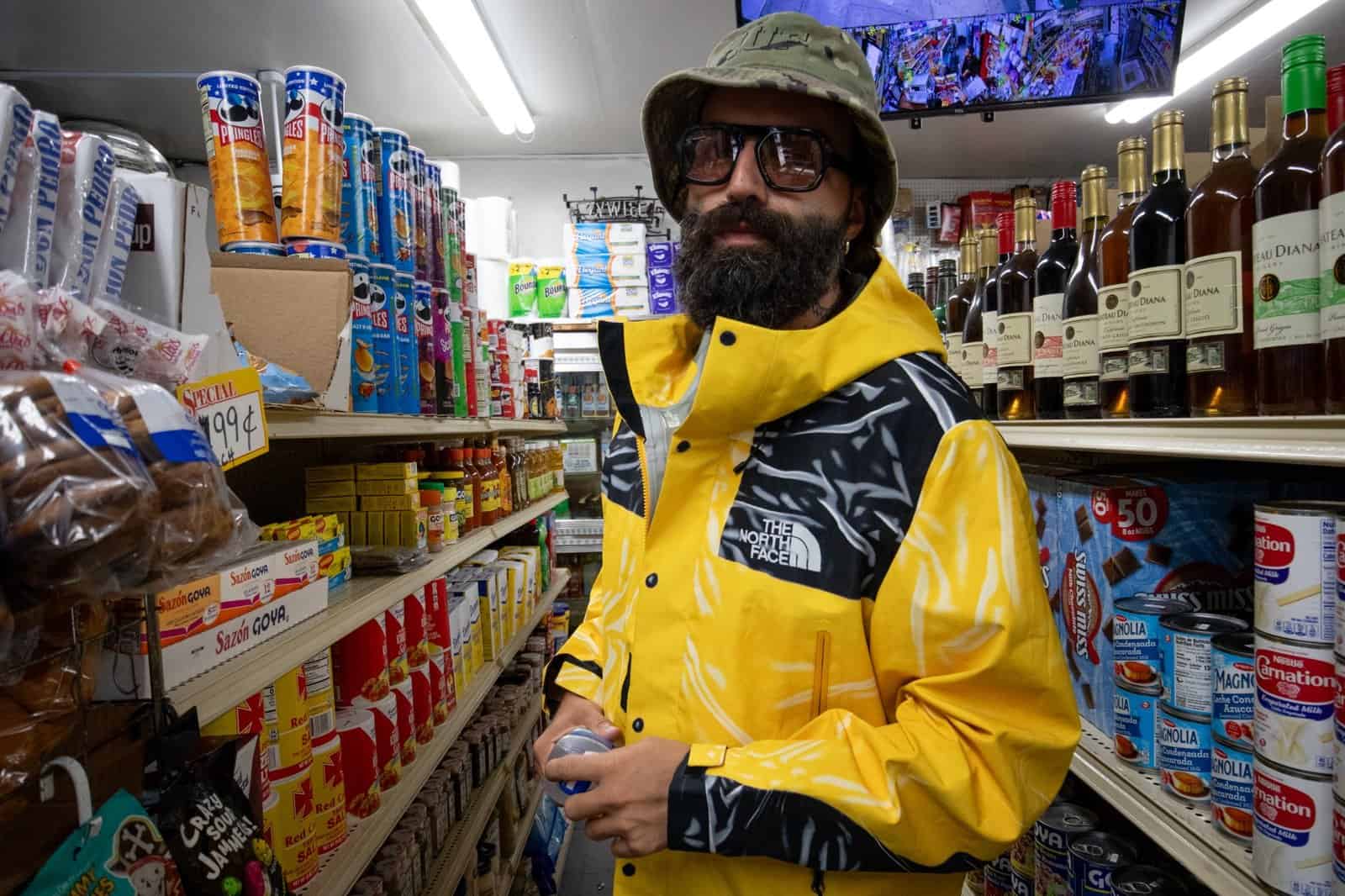
Photo @ Giulia Feleppa
That then is the true role of the DJ, the one who was at the center of Hip Hop culture, the one who on every dancefloor since the 1970s has always had the role of proposing, intercepting, and entertaining through new music, not necessarily on narrow terms, but new to the audience, whether they were current pieces or released years earlier. And in an age chock-full of easy-access music, it is a fact that DJs are in demand anyway, as if they are called upon to bring order to the boundless musical universe.
On the other hand, the way of searching for music to be featured is also changing: “I'll tell you, today the way of information fruition has changed dramatically. Imagine accidentally ending up on the YouTube channel of a platform that records house parties, just because the algorithm decided you might like it. You find yourself looking for a Track ID in the comments, do a search, find an artist's name, follow him on Instagram, and realize he is connected to someone you know well. The amazing thing is that in this game, a simple click takes you into a global network that grows and transforms every second. It starts with a new track you like, you play it, and within a short time you get in touch with the artist, exchange unreleased tracks, discover new collaborations. I don't have management pitching me at big festivals, but what I do have is direct access to a global scene that is more connected than ever. Distances are shortening, barriers are falling, and those people I used to watch from afar are now a message away or maybe on the same stage with me an hour before or an hour after. There is an army of new producers out there ready to remix as soon as a trend explodes, consuming every trend in the blink of an eye. It's a fast, but exciting ride.”
It's easy to realize this in clubs in Italy, let alone in cities like New York where legends and newcomers face off: “At my last show in New York this summer, I experienced something unimaginable. I arrived in the Bronx, a place that is not only the cradle of legends who have shaped the music that inspired me, but is also the beating heart of a culture that has revolutionized the world for millions of people. Of course, I never doubted my abilities, but I still arrived there with my head down, feeling the weight of that history. Being welcomed, understood and appreciated by the community gave me a strength that I cannot explain. In that moment, I knew I was doing the right thing.”
And as we chat, we talk about New York, and Sgamo's Milano playlist runs in the background: there are the notes of ‘Your Daddy Loves You’ by Gil Scott-Heron, a Tennessee poet who moved to New York at a very young age and then somehow became the father of rap as well as a musician beloved by those familiar with black culture.
“Whether we like it or not, the most powerful and revolutionary music in the world is black. And don't hold it against Fred Again, his multi-million-dollar family, and his fellow churning out planetary hits, but from the 1970s to the present we have witnessed masterpieces that we owe to the children, grandchildren, and great-grandchildren of African-American immigrants. History shows us the atrocities committed by whites in power, who played Risk with the lives of hundreds of thousands of human beings for their own interests. And so, for example, Fabolous, who is supposed to represent authentic Brooklyn rap, if you go and delve into his history is Dominican! Sometimes I talk to my colleagues who have never wondered who was in the Central American islands. History comes to our rescue, and yes, this is where the white man brought the black man. And from that land, Africans crossed the ocean to the United States. And if you think that's a platitude, I'll tell you that if in 2024 it's the same black people who are dreaming of a socialist Africa, I'm not afraid to say that Kanye, Gil Scott-Heron, and Fabolous are somehow related.’
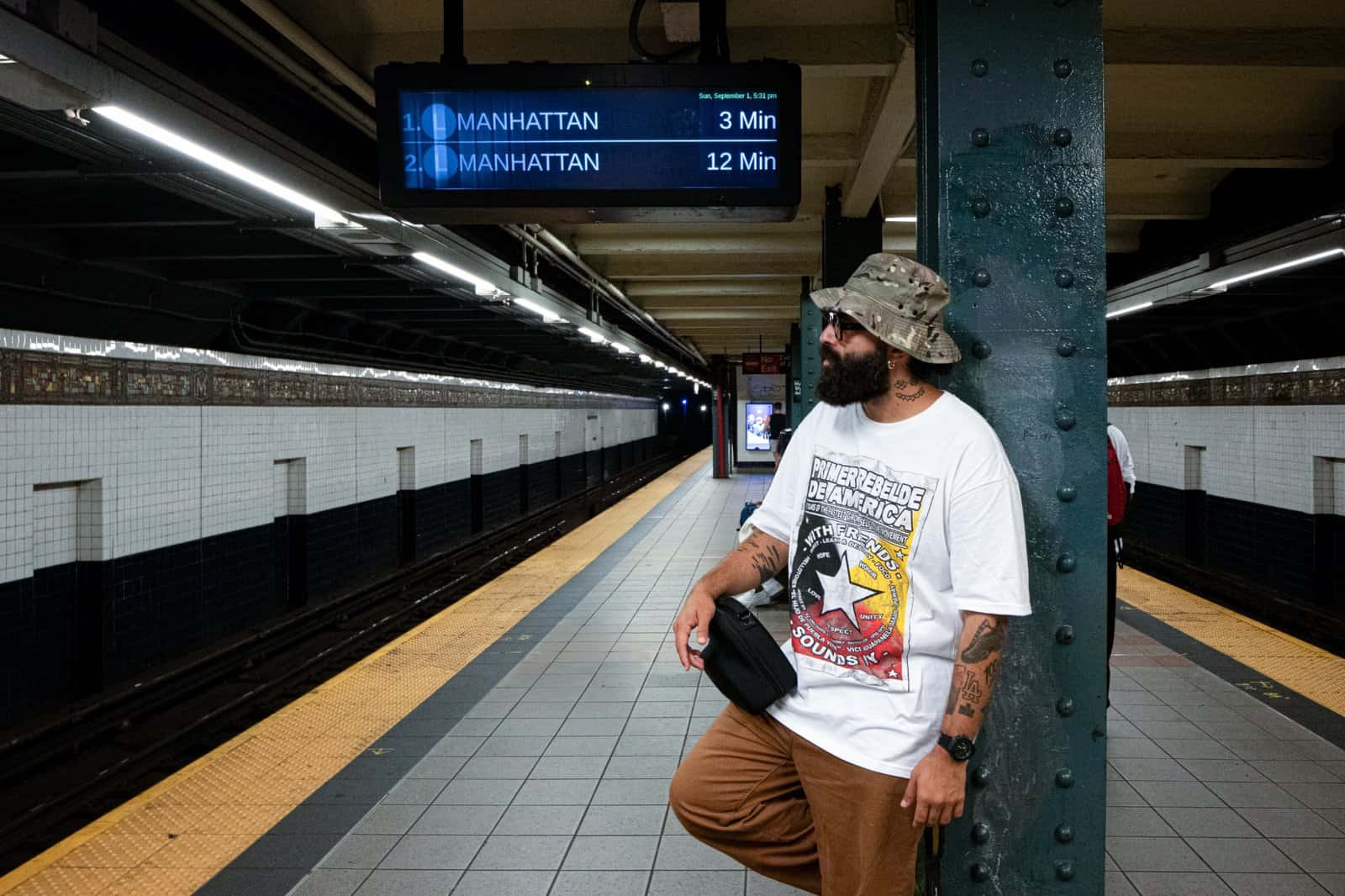
Photo @ Giulia Feleppa
In African-American music comes out strongly that sense of community, of unity that great names of the past have talked about, on which entire movements were founded... “You know, the thing that made me fall madly in love with Hip Hop, after initially impressing me with the sound and the aesthetics, was that sense of small, tight community, strongly linked to the values of aggregation and inclusion. In Italy, not yet having commercial recognition, it allowed a minority who lived it a real space for authentic expression. Spending weeks on the dance floor, between trains and buses to get to jams and rallies, meant sweating every chance to have the opportunity to make connections and share experiences, tools and knowledge with others. That is why today, even though the means and possibilities have changed, I escaped from the Hip Hop environment and found my home in this international micro scene, where I find the same values. Whether it is called Global Dance or Future Beats, for me the important thing is that behind every creative insight there is still that sense of purity and creativity. Maybe that's why I still have a hard time selling my ass on TikTok and the like. The scene I am a part of is not limited to music, but becomes a network that expands around the world, a cultural support where each individual expresses himself through his own talent and style, helping to strengthen the community itself. In a way, even though the sounds have changed, this is still Hip Hop to me.”
One nation under a groove, we are always there at the expression coined, or at least sung, by George Clinton. What unites those who experience certain types of urban cultures is certainly not only music but, in many cases, lifestyles and contexts that are not always easy. Those who grew up in Bari's housing projects, the same ones in which thousands of second-generation children live today, know this.
“My mother raised me in an apartment building 350 meters off the Bari housing block, in one of those apartment-dormitory buildings built in the 1980s. Because of this, I undoubtedly carry with me all the stories and sounds of the neighborhood, which are an indelible part of me, but while I have had to put up with several tough faces over the years, undoubtedly there are those who had it even worse 500 meters from my balcony. The dynamics of integration and resilience that I see today remind me of those experienced by my generation. Personally, I have lived and continue to live with the classism of the average Italian, especially when it comes to proposing a project to certain pro-inclusive Milanese realities, where, however, at the base, if certain aesthetic canons are not respected, you may have a valid message, but you will have a hard time getting the right people to open their doors for you. Consequently, this is the spirit that I bring to the production of the club nights that I organize with wegoing.sound and, when I can, that I develop in activities to get young people to express themselves: an inclusive space where everyone can rediscover their own voice and where every culture is seen as an enrichment, never an obstacle. That is why, as I anticipated, I try more and more to give my sets a political complexity, where the rhythms and sounds I propose are not just music, but pieces of distant identities that find their value also thanks to my sharing. It is as if, every time, I am bringing to the stage not only myself, but also all those stories of migration and adaptation that inhabit the neighborhoods and find their home in these evenings.’
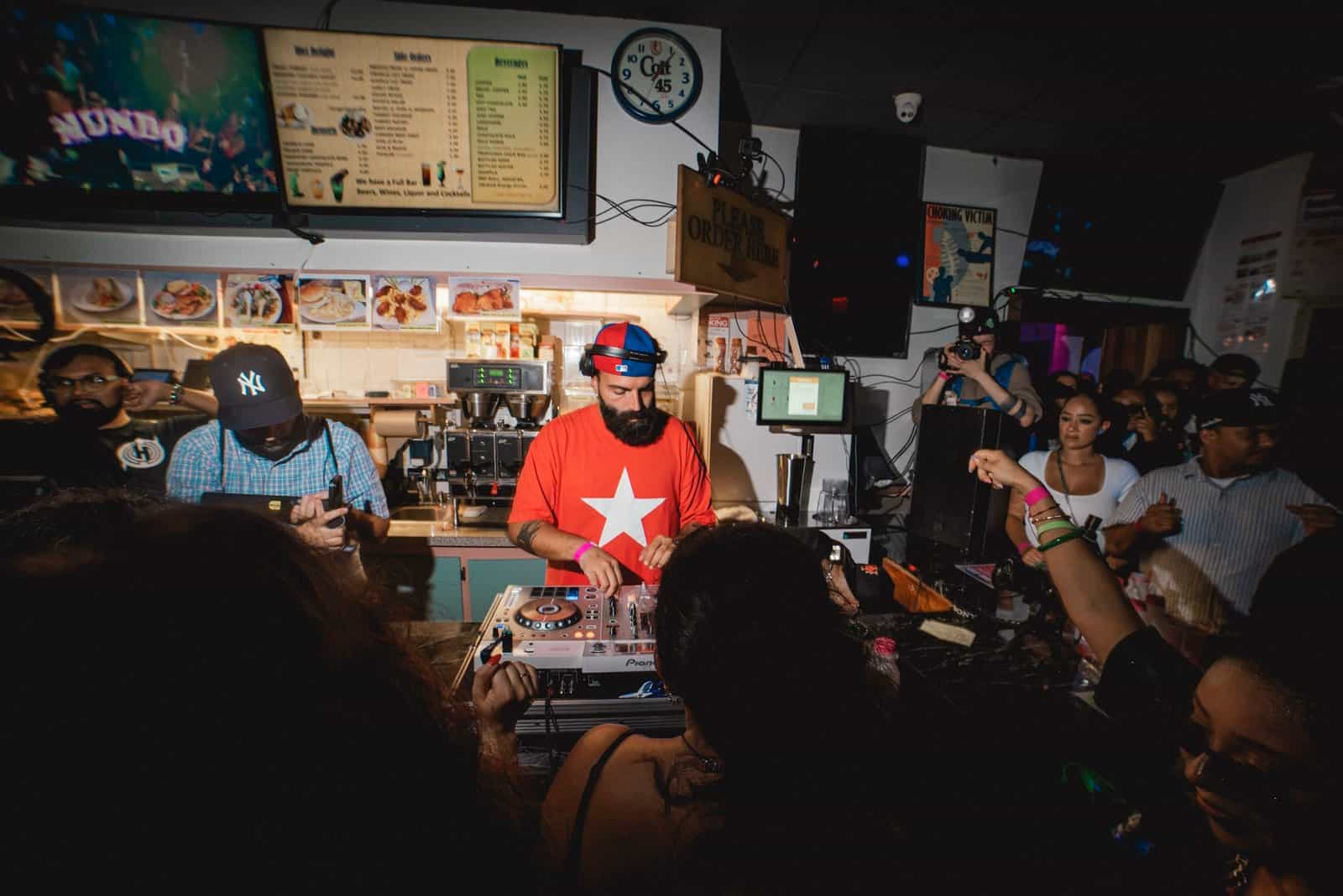
An approach that comes to contaminate both the big stages of European festivals and the stages of the Asian clubbing scene. “I like small, dark clubs where the sound beats without having to turn everything up to the max and where I have the opportunity to share the energy of the people who gather around me for a few hours. I had some really incredible experiences, for example at the Music Box in Lisbon. The party in the Bronx Bodega in New York was another unique moment. There are also other experiences I would do again, such as at Auro in New Delhi or Antro Juan in Mexico City. Some, like the All Club in Shanghai, I would have liked to have experienced better, but they still left a mark on me. And then there was the Sziget Festival in Budapest, where for the first time I had the opportunity to play for a prepared and diverse audience that stayed there even after I finished my set, with whom I stopped to talk about politics, among other things.”
Globally, Hip Hop is known for its well-defined though ever-evolving aesthetic: it all started with the jackets chock-full of tags and quotable patches from historic Bronx and Brooklyn crews, from Eric B and Rakim with Dapper Dan jackets... We were talking about this with writing pioneer Skeme who, in talking to us about the 1970s New York writing scene, said ’it was all about showing off.“ showing off by mixing accessories, styles, and references has always been a part of Hip Hop culture from its earliest days.
“The appeal of the Hip Hop aesthetic immediately captured me, and with it came a love for clothes, as if they were a natural language to express my true essence without having to speak. Yet, I see fashion as an industry that is often lost in superficiality, fueled by consumerism and rigid conformity. I am not interested in chasing trends or meeting the expectations of a society that dictates what to buy. I was street before it was cool, and I want to stay that way, evolving along with the canons, without compromise. Sure, this approach has closed some doors for me when it came time to please certain personalities, but it has also brought me closer to brands I have always admired, with whom I have had the privilege of collaborating in creative marketing activities or simply playing at their events. I think of the 70th anniversary of New Era's 59Fifty in London, the presentation of the Jordan XI Taxi retro in Milan, the Carhartt x Patta x Awake NY collabo during Fashion Week, the DJ set for the launch of the collabo between Tommy Hilfiger and Timberland, the B2B radio show with Karl Kani, the soccer tournament with Kappa. How Hip Hop is all this!”
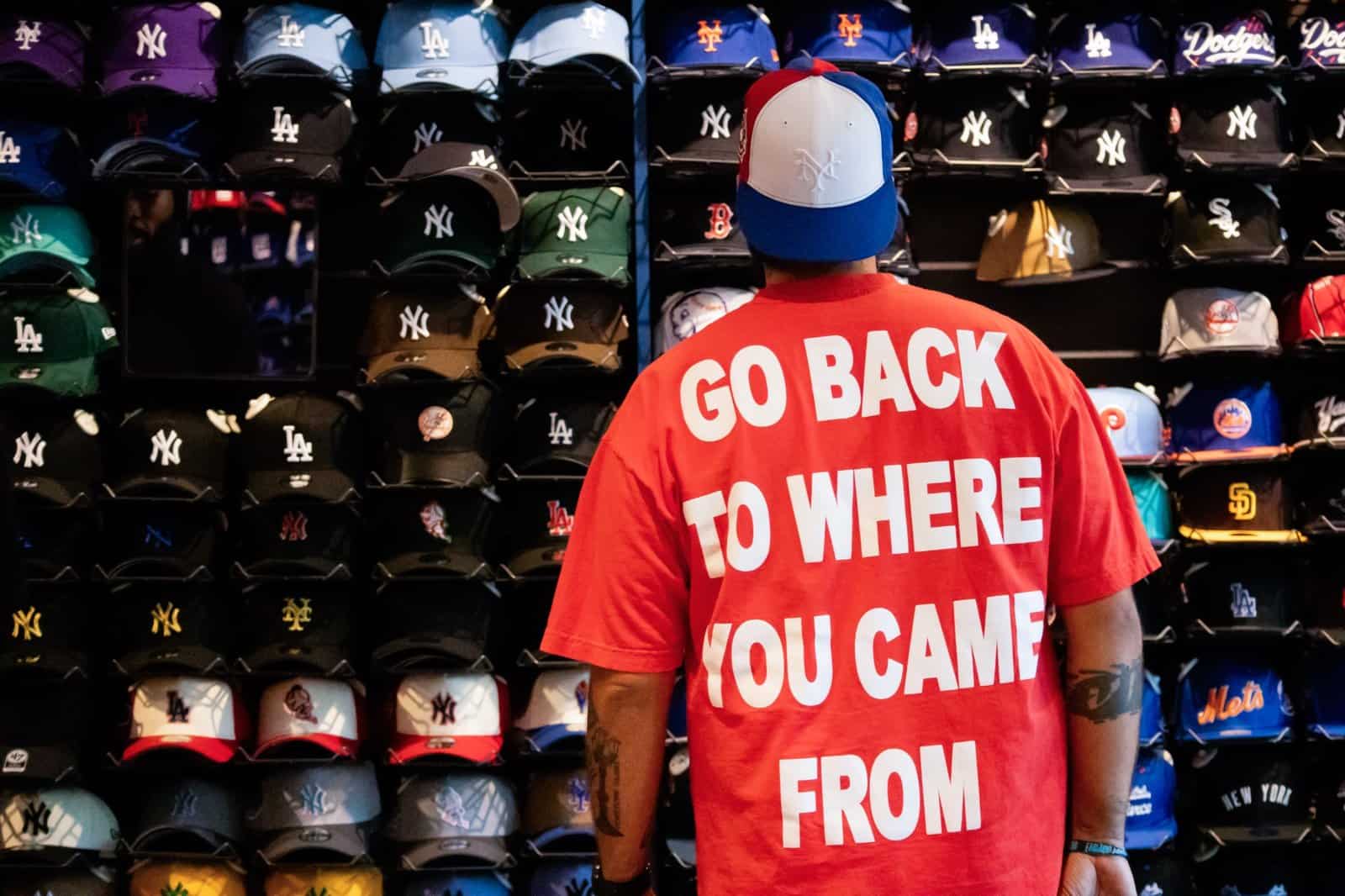
Photo @ Giulia Feleppa
Trends, contaminations, evolutions and DJing: what trajectories is it taking? “AI has definitely further expanded all kinds of creative horizons.
The experience that can be built with the audience is always more intimate, personal and transformative. So who knows, maybe in the future, in addition to the more entrepreneurial aspect related to the world of events, all this interest I have on issues such as accessibility and collective inspiration might open a path to new forms of participation. For the time being, I am enjoying the journey: I recently put my mother in charge of what will be the more social and nonprofit aspect of wegoing while with Sergio we are taking care of the calendars and logistics of the events in a more precise way to try to give everyone the space they deserve and in the meantime not lose out on health (as was undoubtedly happening to me in the last season). We're making steady progress but, honestly, I still feel like I'm far from the goal to have to worry about landing.”
JOIN THE PRIORITY LIST
Break boundaries
Break boundaries



 Italian
 English