HIP HOP, yes, yes, y'all, YOU DON'T STOP... From Kool Dj Herc to Lord Finesse
By Paola “ZKR” Zukar
AL 25 - October - November 1997
“If you hear the base of our song “Itʼs My Thing” and I ask a little boy, ʻWhose base is ʻthis?ʼ, he will say ʻOh, this is Jay Z and Foxy Brownʼ...”
Erick Sermon, EPMD
When Wu Tang didn't exist, when there was no music by Notorious BIG, by Tupac, by Jay Z, by the Alkaholics, by Mobb Deep,
when no nation in the world was composing in rhyme, when the turntable served only as a record player, when the deejay reigned lonely on the one-dish console and Master of Ceremonies was the one who presented “Soul Train,” a universe of incandescent magma simmered beneath the sick streets of the South Bronx. At its origin was chaos ... and only one man, in the right place and at the right time, could have ignited the spark that, turned into a flame, still burns brightly in the present day. By chance and by strange space-time combinations this man, with a name that is not surprisingly mythical, was Hercules, for everyone Kool Dj Herc, the godfather of Hip Hop.
Thanks to him and his creativity, the music has changed its face forever, constantly renewing itself by passing the baton from hand to hand. Hip Hop today has dozens of different aspects and subgenres, but what always and still makes it strong and healthy is the possibility of choice, of being able to find within it something that makes it more like the way we see things in life. It sounds easy told like that... In reality, this is just a paper on which you write messy notes that have nothing to do with the real history of Hip Hop, nor with chronologically and structurally perfect dates and data. Below you will find three different characters from different eras, an introduction, opinions in a single article, a set of words from which everyone can draw different conclusions for the questions we are increasingly hearing asked around: what was Hip Hop like in the beginning? How has it changed? Definitely for the worse... Definitely for the better... What happened to the people who made outstanding contributions to this culture that we no longer know or hear about? Read on and draw your own conclusions, this is just a minimal (con)tribute because as we approach the 30th anniversary of the birth of Hip Hop, merits do not always go where they should. It is my belief that, as in life, everything changes and it is right that evolution prevails over the original stage in order to avoid stagnation, but as I have heard before “if you don't know where you came from, you will never make it to the place you want to go”... Respect and gratitude go where everything that today is a given, yesterday was just imagination...
The thing that scares people the most about Hip Hop is the fact that people follow the beat for the beat itself. Hip Hop lives in the world-not in the world of music-thatʼs why itʼs so revolutionary.
Max Roach.
From 1968 to 1972, the Bronx was completely in the hands of gangs, gangs with names like The Organization, The Black Spades, and The Savage Skulls of which a good portion were devoted to protecting their affiliates through violence and intimidation. The southernmost part of the Bronx was planned for those immigrants who, in the late 1960s, continued to flow to large cities like New York in an attempt to find gainful employment and inexpensive housing. That area of the Bronx was designed just for them: giant barracks and lack of any services were the clear plans of the public administration that left the citizens of that neighborhood to their fate; and the gangs did what they had to do, take control of an area that no one governed. The civil rights battles that had already had a fundamental social significance in 1964 left an indelible mark on some neighborhood leaders who modeled their gangs on the image of the African-American revolutionaries who had led the struggles of those years. These attempted to bring positive activities toward their community albeit always with limited means, but with the support of the families and the people who badly bore the burden of an existence made impossible by the prevarication of violent and unscrupulous gangs; on the other hand, the latter were simply concerned with economically supporting their gangs with drug trafficking and maintaining control of the territory by any means. Beginning in 1968, the escalation of these different positions led to extremely violent confrontations that resulted in an incredible number of arrests and deaths caused by this veritable gang war; the situation became so extreme that it finally caused, around 1972, a decline in neighborhood gang participation and support: the gangs began to dissolve and, depending on their attitude, each affiliate took a different path.
It was in this almost unreal atmosphere, that a good part of the leaders interested in positively developing the potential of their neighborhoods and their people, joined together in order to organize events that could entertain and socialize the communities in which they found themselves living: the quickest and most incisive way were the block parties that could have the most disparate settings, from the park, to the school, from the nightclub to the street. Their only purpose as ‘organizations’ was to put together parties that everyone could attend, charging a small fee at the door, just so they could buy better and more powerful equipment from time to time. The leaders of these crews, never again called gangs, were the DJs who controlled the sound systems, the systems that made people move who finally got back to wanting to dance, re-crowding dance clubs that had been empty for years. The best-known DJ of that period, thanks to the unorthodox sound of the stuff he put on his turntables, bore the name Kool Herc, a former member of the Black Spades, who would shortly, and unbeknownst to him, become the godfather of Hip Hop. As the first out of a gang with his own rig and crew ready to organize events, Herc, with his strong Jamaican roots, was poised to change the face of black music forever. Bringing with him the tradition of toasting mixed with an irreparable aptitude for funk and the hottest segments of a record, his parties immediately began to talk up the neighborhoods and spread like wildfire among other DJs.
Jamaican toasting is the ability to speak over remixed instrumental versions of a song, called dub, in a syncopated and original way, creating short stories or simply entertaining, with catch phrases, the people dancing in the room. It was the dancers themselves who were the impetus that made Herc look for the section of the record that could heat up the dance floor to its fullest, without ever bringing down the energy level of the piece. While most traditional DJs played disco music that was played by radio stations one track after the other in their entirety, Herc and a handful of other DJs such as Grand Master Flash and Afrika Bambaataa, knew how to take the audience to the max through the close selection of the funkiest 30 seconds of a record. It was the DJ who would choose the most exciting portion of a song, mixing it with another and hardly playing a song from beginning to end, because the sole and ultimate goal was to get the energy up to its peak and keep it up there for hours on end. To achieve this, Herc is known as the first DJ to put two turntables on his console to use at the same time. Fragmenting, recreating, abusing, mixing, transforming, resonating... People were ready to take on a new sound, to dance to the rhythm of tunes that existed only in the DJ's mind and took shape solely from the ‘misuse’ of his turntables. Along with this new art form, the way of dancing to these rhythms also changed radically, and B-Boying was born out of the need to follow the new noises coming out of the sound systems. Just as people used to use record breaks (those famous short seconds when the bass, drums and rhythm imprinted by the guitar give a glimpse of the purest essence of a beat), so dancers became accustomed to moving to that sound, at the moment of the break, becoming ‘break’ dancers.
“... You never thought Hip Hop would go this far, now Iʼm in the spotlight because I compose outstanding rhymes...” Notorious BIG, “Juicy”
Back to the future... 25 years later... Meanwhile, in New York, things have changed a lot, even though the South Bronx continues to be a not exactly desirable place to spend one's existence. Rap has become a multibillion-dollar music genre, capable of creating dream profits even in the pockets of people and personalities who would never have believed in a sum of which you can't even count the zeroes. The riches and possessions of some are often not proportionate to their contribution to the totality of the culture, and conversely, the disappearance and economic hardships of other pioneers support the hypothesis that when money enters the picture you start counting the casualties of the battle. But not all ‘originators’ feel victimized; there are those who still carry on their stuff, don't make too much of a fuss, and go on their way...
“Looking at the old videos, the essence was ... yes ... turntables and clubs. I was forgetting that we were the DJs in the clubs. We used to write rhymes and rehearse them over the phone. These little things are coming back...”
Afrika Baby Bam, Jungle Brothers
THE WAY OF HERC...
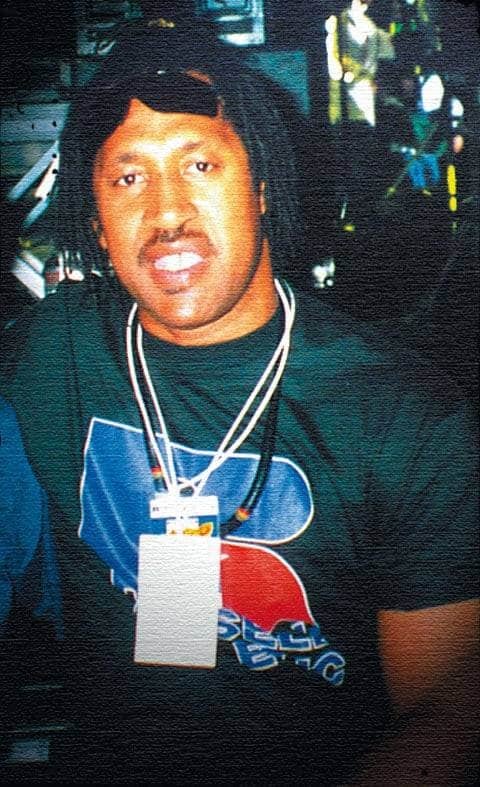
“I have always been accustomed to hearing an artist's abilities through audience feedback, through the responses of the people who come to hear him when he is on stage. That's what matters most; if you get up there and people decide that the guy playing is poor, that's it -- he's poor, period. I come from a DJ tradition and there's no way to lie-if people don't move to the stuff you put on, that stuff is no good, you're doing something wrong. The DJ, more than anyone else, should realize what is happening to him when he is behind his turntables. Throughout the entire event (Zona Dopa-Hip Hop Village n.d.a.) that I was able to follow, there was not a single downbeat moment. All the groups had their support, even if it was from different people, but Italian Hip Hop is alive... You could see it from the breakers who were busy above and below the stage, from the different sounds coming out of the system, from the softest to the hardest, from the different style of the DJs, from the Alien Army experimenting with new creativity, to the DJ making his audience dance.
It is diversity and choice that makes a landscape like this rich; I think this is the right way. All these kids should not feel lower than others just because they are not from New York; they are Italian and Italy is like that. It is always a mistake to make comparisons with the United States. I already felt this feeling when I was in London. It's paradoxical... The English guys despised their mc's, because they said they weren't real, but they meant they weren't like the ones in New York. Absurd. But English kids shouldn't even try to be like New York kids, because Hip Hop is just the opposite of that mentality. To be yourself, always. That, if you will, is the only ascribed rule of Hip Hop. Be loyal to the people you are talking to, to the audience you are addressing. We are already able to make a world map of Hip Hop. There is Italian Hip Hop, there is English Hip Hop, there is Japanese Hip Hop. It has become universal, it has become a universal language, no more and no less. I have never been selfish, much less parochial. What should I say that I am Jamaican? What should I have been saying all my life? This Hip Hop is Jamaican! Not at all! I actually have no claim to make, I have no copyright on something as big as a culture, just as no one else does, other than to respect a person when you see him or her committed to the culture. I am not made to judge anyone, much less to criticize people who put their energy into it, using their own dialect or their own way of doing things. It is certainly not a mistake, taking inspiration from what is happening in the United States; if you want to use a particular slang, you are free to do so, but it has to be of your own language. Entertain your audience so that they can always understand you, make them laugh with jokes they can follow, otherwise there is no taste. Hip Hop music has existed for years with the concept of using what you have at your disposal, precisely to entertain or make those who listen to our stuff think. Using what you hear in your neighborhood, in the situations we live in every day, using the music that is played in your neighborhood and putting it on your record, that's creative; that way, you will hardly be standardized, you know what I mean? All the hatred that you often hear, especially in live moments, is to be avoided, especially when it does not have a spirit of competition, but is just sheer unfounded criticism. Competition helps creativity, but we should always have the ability to understand when the party is over, to understand that it is not personal, I love you as a person when the concert is over, when our professional interests give way to the everyday person.
Competition and challenge is just something we should use to spur ourselves on, to get the crowd that has come to see us more involved, to release an energy we have inside. But none of us should take permission or feel entitled to fight and insult a brother or sister when the show is over and everyday life begins. The same thing happened at home, in the United States, this is what is ruining and degrading the whole business. It's okay to stand up for your ideas and see that Hip Hop is one of the most valuable things we take with us when we go to sleep and have with us when we wake up; too many people in America take a lot of things from this culture and give nothing back in return. Maybe they are capable of squabbling over a silly difference of opinion, but they do not sufficiently defend the culture when it is attacked from outside. This is what makes the current situation in the United States sad. We have to stop the animosity that you see backstage between artists and in the audience between attendees, because the moment you screw up and the authority has to intervene, it is already too late... You will no longer have spaces to express yourself, you will no longer have the joy of going to a concert without the fear that something unpleasant will happen to you. You have to protect our interests, because most of the venues in the United States, they don't even want to hear about rap nights, even if you pay a very high insurance coverage, a lot of times they tell you that they don't need this kind of headache and you won't play anywhere anymore. But the most incredible thing is that very often the mess, it doesn't even start with the audience, it's the artists themselves who do the biggest shit. A few years ago, guys came into the Hip Hop scene, guys telling their neighborhood stories, and these stories are about guns, drug dealing, the number of women they have at their disposal, in short, everything that for them is the only way to be somebody. These guys don't give a shit about respect, they just tell you how they're going to get that respect. They'll shoot you if necessary, they'll give you a lot of beatings if you look at them the wrong way, and if they accidentally bump into you, they won't say ’excuse me,‘ they'll say ’get the fuck out of here.‘ So when they get into the business, that's what they will tell in their pieces. So the media started talking about ’gangsta rap,‘ and the definition is right because that's what it is. These guys were really selling drugs, they were engaging in illicit activities and then with that same money they set up their business in the music business. And nobody stopped them, nobody told them, ’hey, this is not what we need, what you guys are doing is not the ultimate purpose of music.‘ Somebody saw the big interests behind this way of doing things, and nobody had the dignity to stop them. Or at least to limit their importance, trying not to expose the younger people and the great masses to such a thing.
It's all about money, and those who could have done something at the time and didn't were the first to cry when the dead began to fall. But you knew it was going to happen! Don't tell me otherwise! You as a record label, you as friends, you as promoters, you as managers! You gave permission for these things to happen, you knew that certain things would happen. Those who started listening to certain stuff as early as ’84/’85, how were they going to behave once they reached the age of sixteen or seventeen? How could they interpret a message that has been in their ears all this time? If you don't have good support from your family, you expect someone else to tell you what life is like. Rap is here for us, to relax, to have fun, to make us think, to make us enjoy the atmosphere between friends, between brothers and sisters. That was the original purpose -- Hip Hop, rock and don't stop. This is the only definition of Hip Hop that I would put in a dictionary. If I have to provide my ideal situation, I like a party atmosphere, the atmosphere I used to breathe a lot of years ago. Personally, I like the DJ who gets people moving, who can get people dancing, who uses the microphone, who wants a response from the people on the floor. I don't really like to see people all standing around, crammed in, watching as if hypnotized by a DJ's tricks for an hour. This thing is interesting for innovation, for new creativity, and at a concert it's good for a few minutes, to show your skill, to get some extra applause, to develop business. I like to hear the mc and the dj working together, without always using that horrible machine that is Dat. It's okay to use it in some parts of the concert, but it's being abused too much lately. The side-by-side collaboration of the dj and the mc is what makes them human, able to make mistakes, but most of all able to pick themselves up and carry the show forward, together, to everyone's delight.”
“Although Grandmaster Flash preceded the Sugar Hill Gang by a few months with a song called “Superrappinʼ,“ the commercial success of ”Rapperʼs Delight” got the latter off the ground and set the pace that confounded the record industry."
Sylvia Robinson, founder of the Sugar Hill Records label.
MC LYTE'S ROAD...
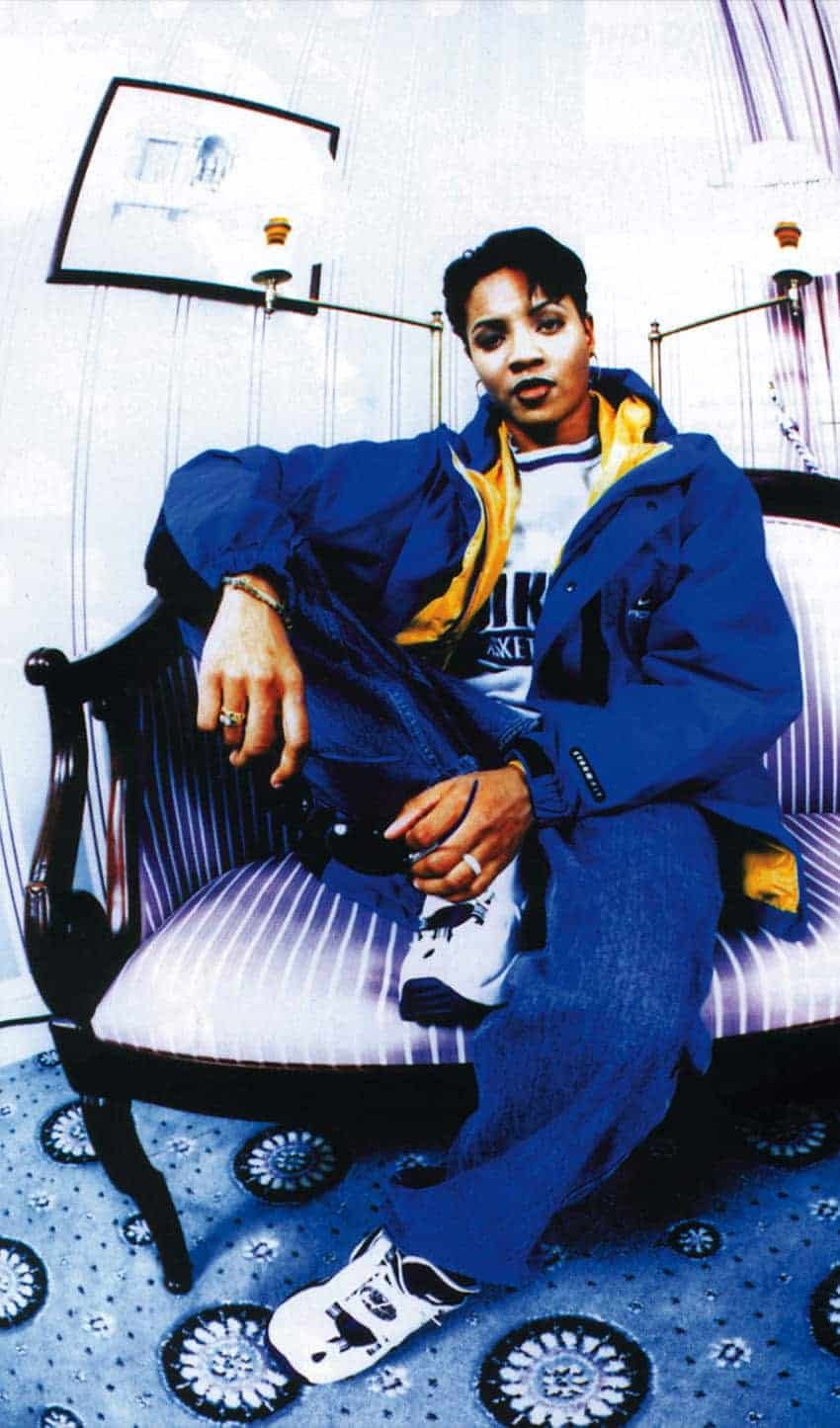
“I started with this profession when I was sixteen years old and I immediately got the chance to work with Atlantic Records for my first album, “Lyte As A Rock,” it was 1988, and I started working with different producers including my brothers Gizmo and Milk, the Audio Two, who taught me some of the secrets of the business, because, as far as Hip Hop is concerned, I already had hundreds of examples around me in Brooklyn. I certainly wasn't the first girl to rap, in fact before the record contracts came, other women had been doing it, but always in the penumbra. People like the Sequence, three girls who on the Sugar Hill label even made it to the charts in 1980, or the chicks who were part of the Zulu Nation Rappers, deejay Jazzy Joyce and even before that La Spank. When my first single, “I Cram To Understand U (Sam),” came out, the situation was certainly very different from now; everything was much more ‘hardcore’ for chart-topping Hip Hop, probably thanks to the successes of Cypress Hill, Public Enemy, they and other groups, at that time recorded pieces that would long set the pace for other artists, and the bottom line was hard to the bone. Then times changed and Hip Hop morphed, exploding like an atom into thousands of particles, starting a prosperous period economically, but leaving behind part of the culture that had started as a unified whole.
Rap has taken over, as far as the media is concerned I mean, and it has become the tip of the iceberg; that's not to say that the rest of it doesn't exist anymore, on the contrary, at this very moment it's getting really interesting, because there's a lot of creativity around, on different levels and in different areas. There are so many very good, young music producers out there now, people like Jermaine Dupri, Puff Daddy, Rashad Smith and others... All guys who have been blessed by the Lord with endless and very rich talent; and, as far as I'm concerned, I'm happy that our music has such a strong exposure to the masses, I want people to feel an irrepressible desire to stand up and move around, appreciating the new sounds that artists and producers put together for them. Right now, everything is being sampled, I myself was happy to use Diana Ross“ music on my latest single ”Cold Rock A Party,“ and sampling certain hit music is the hottest thing right now. This period we're going through now, it reminds me a lot of the early days of Hip Hop, when the Sugarhill Gang brought out ”Rapper's Delight," and people were going crazy in the nightclubs at the time. Then we switched to the original beats composed by special machines, with sounds never heard before. But I am convinced that it is just one of many cycles that Hip Hop has gone through, just as it happened in the past, it happens now, and it will happen in the future. In my opinion, within a short time, we will return to original productions, just as it happened in the old days. All it takes to transition, is one artist, accompanied by a producer who pulls out an original beat, and when the track makes a splash, others will follow and it will have started before we know it.
And then, this moment of sales euphoria, it gives us the opportunity to get out of the U.S. more and more, to see other countries and to meet other people who are crazy about your music, and that fills me with satisfaction; this thing didn't happen often back then, in fact, it was already an event, in the beginning, to move from one area of New York to another. Then, we started to tour the U.S., but I can assure you that the classic places I have already seen them all, dozens and dozens of times: Atlanta, Texas, Chicago, Detroit, Ohio, California, San Francisco, Oakland, etc... Today, a lot of rappers have the opportunity to come all the way to Europe to play or even go to Japan, and this is a huge advantage... To be able to think about traveling the world, when once you barely thought about taking the train to Manhattan is quite a change... right?
“Whenever they say that Hip Hop is dead or fading away or failing to innovate, a song has always come up that has helped bring about change, such as Doug E. Fresh with “The Show,” Run DMC with “Itʼs Like That,” and Eric B and Rakim with “i Know You Got Soul.””
Afrika Bambaataa
LORD FINESSE'S ROAD...
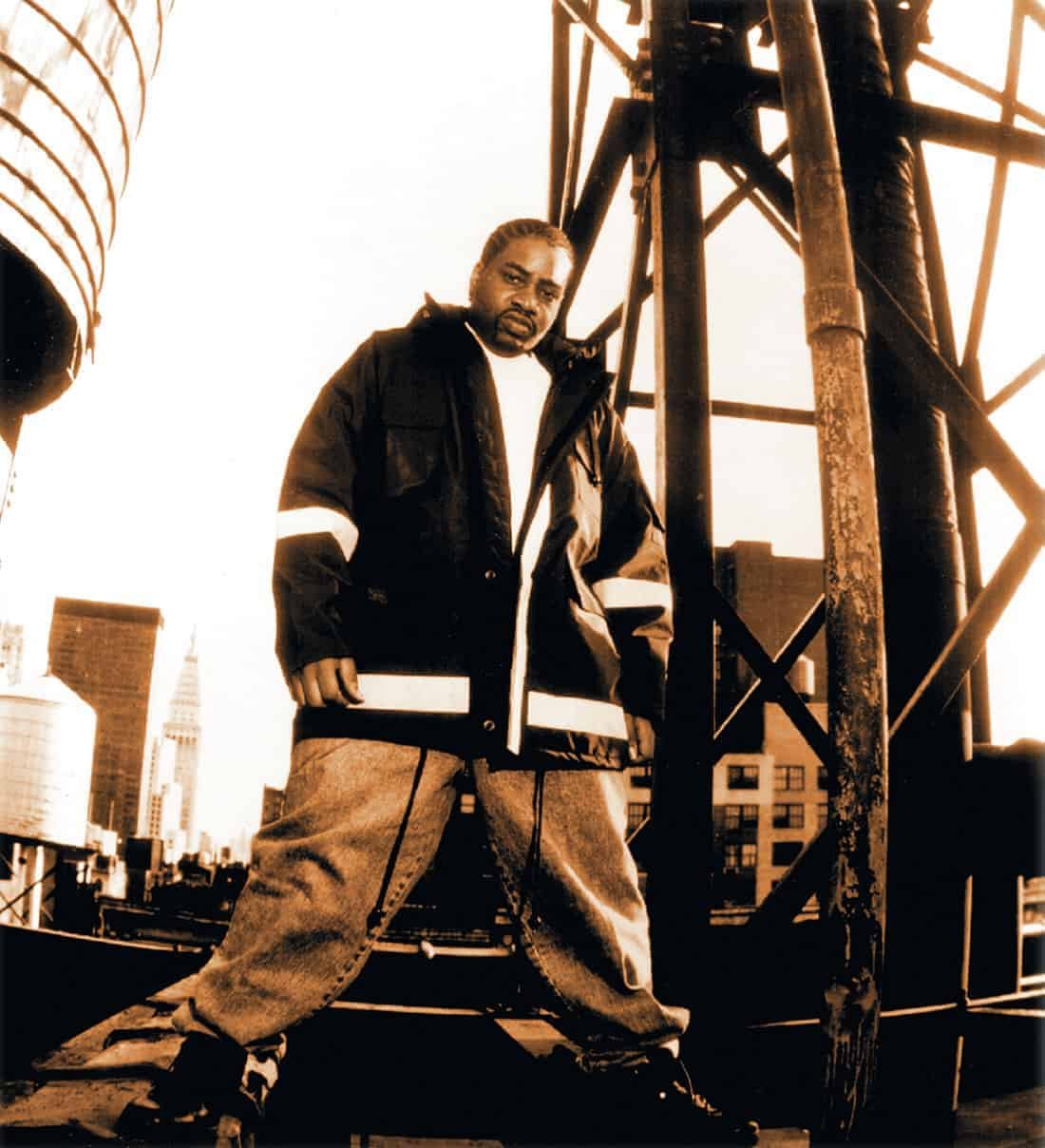
“Right now I don't feel very represented by a certain industry and the direction that the more commercial side of the business is taking. Radio airplay is taken up exclusively by commercial stuff, and when an a&r gives you his business card and tells you to call him, every time you call you're going to talk to the fucking answering machine and they're never going to call you back. The saddest thing is that they are not really trying to cultivate new talent, they want to play it safe, but it's too easy. It's not always like that, but it happens a little too often lately. When I come to Europe, I know that not many of the kids around here have heard and bought my record, but that's normal, because I don't get a chance to show up around that often. But when I get on stage and do my show, I'm sure people can tell the difference between a dull show with a mc traveling on dat and the kind of vibe I bring when, halfway through the live show, I get on the console and move behind the cymbals, I like to play with my DJ, do some real Hip Hop, deliver good rhymes and real entertainment to my audience. I've always been a DJ, from the beginning, but people don't know that. In New York, people don't really appreciate those kind of nights anymore, but when I play in Europe, I know people want to see the ’real thing,’ the way it used to be a while ago, with the DJ and the mc traveling together, and here I can also bring stuff from my early albums, I can let go of what I really feel; in New York I just have to produce tight 25- or 30-minute shows, because people are getting used to the fast rhythms of the more commercial artists who come to the club, do six or seven songs with a lot of frenzy, then count their money and go to the after-party.
I like to take my breaks, to talk to the people who came to see me, to shoot a couple of jokes, to make the audience laugh and have fun, to propose my old pieces as if I had written them yesterday. The thing is, I like to talk to the audience, the people who listen to my records and the people who then come to see me. Some rappers nowadays get the base so loud that you can't even tell what they're saying or if the record skips; I can smoothly switch to another track routine, I certainly don't stop the show, shouting ‘put the dat back from the beginning’... Is there a problem? Who cares? I can move on to other sections, but not everyone is able to be on stage, and it's the live show that really shows if you're capable. That's the beauty of working with a good DJ and vinyl. Don't get me wrong--doing a couple of parts with dat is fine, but it has to be the exception and not the rule. Not to mention the lyrics and the kind of songs you hear more and more lately... There are a lot of artists who have figured out how to pull out a sales record, just go dig up a hit from the past and restructure it. Some people don't even seem to want to rap anymore! I mean, they still use rap, but they put an r&b style into it. You lose that rawer, darker vibe that made the Hip Hop tracks of yesteryear distinctive. I don't want to generalize, there have also been some pretty good things in that area, there's nothing wrong with using certain melodies, but if I were doing it, I would always try to do it with a lot of soul, with a lot of passion and soul. The inspiration comes from r&b, but it's up to the artist to make it interesting and innovative. You've also completely lost the fun part of Hip Hop, the sense of humor, people are too serious lately. Nobody wants to be the joker anymore, the one who makes other people laugh. Everyone wants to be the tough guy, as if there's something wrong with showing the more joyful side of yourself; I like to tell everything about myself. I've always told what I didn't like about the life I was living, but at the same time, I like to shoot the shit, because I can also be funny while telling it like it is.
Rappers have always also been a bit of stand-up comedians, the tradition of stand-up has always been very strong and important for black people, it's part of the entertainment, it's part of taking over the stage. If you see something happening around you while you're doing your bit, you can stop for a moment and say shit with your audience, you improvise, you talk to them and you get maybe more jokes from them. Other rappers don't even look at the people coming to see them, they don't want eye contact with their supporters. They walk back and forth with their backpacks on their backs looking at their feet. It used to be the other way around. Of course it's not easy to use the right words with the right rhymes to express how you feel, but a real artist should be able to do that. If you hear people like Genius from Wu Tang, you know what I mean right away... The way he uses metaphors, the way he expresses what he feels and the whole atmosphere of his pieces make him special. If the guys are able to delve into his metaphors and understand their meaning, you'll realize how spectacular the end result is. OC, Nas, Gza are young guys who really have exceptional storytelling skills, in them the original spirit remains intact because they are true ’lyricists.‘ Scarface is also really good at composing; when I buy their records, I go through two different phases, a first phase of listening and a second phase of meditation. When I bring up a phrase like ’Out there, plastic is replacing paper,‘ so many people stop at what exactly they heard, but what I really mean is that, in today's world, people are using credit cards more and more than money, and with credit cards, people are easily controlled and maneuverable... It's a metaphor, a way of dealing with different issues with vocabulary and expressions that should make people think. But I understand that not everyone wants to commit to delving into certain topics, remaining tied to lighter and less committed music, therefore more marketable. I really admire the things Wu Tang did; they were able to take Hip Hop to another level in an original and creative way, not copying from anyone, they did a lot for the way rap lives in the world. Even Tupac did beautiful things in his short life, but the media didn't give him a chance. You can be the best person in the world and do the most positive and wonderful things in the world, but if you are uncomfortable, as soon as you make the slightest mistake, they will be all over you to point the finger at you. The media has the power to condition minds, but people in the ghetto have to have the ability to decipher their messages, to understand what's underneath.
One must try to understand their ways so as not to fall into the trap. No one wants you to become a successful rap artist because they would think you escaped the ghetto too easily by pulling up surgeon or congressman salaries. They don't want to see certain examples, but Tupac, Wu Tang and Biggie are in front of everyone's eyes, even though Pac and Biggie are gone. The media want to attack Puff Daddy and Suge Knight because they represent two enormously successful black entrepreneurs who came from nowhere; they want to turn their messages and actions into something bad, whereas what these two guys have taught us is that anyone can be their own boss, that anyone can own a successful business, and that anyone can do what they have already done. In the past we couldn't even dream of having labels entirely owned by black people. The only way to really make money is to have your own label, because when you have to rely on others, at the end of your record venture, instead of making money, you are the one who still owes the record companies something. Let's ask some people who made records years and years ago, how are they doing today? A lot of people don't like Puff Daddy at all. I think he's a genius. There are always two different sides to the same story... Some people are not okay with the fact that he brings so much commercial stuff to the industry, but even if they don't want to admit it, he remains a genius. He went and got a purest ghetto artist and made him sell three or four million albums. There are rumors that he doesn't even produce all those bases himself, and that might even be true, but this is not just about music! This is about the vision he had, the development of an idea. He took Biggie and told him, ’I'll help you do what you want to do, but then you have to help me do what there is to do.‘ Before ’Ready To Die“ came out, there was no ”One More Chance,“ there was no ”Big Poppa,“ there was no ”Juicy.“ Puffy told him that to be successful he would need those kinds of pieces, and Biggie followed him.
Puff had a wonderful vision, and as much as everyone questions whether or not that is Hip Hop, or whether or not the basics are his, in this case what matters is his ability to envision successes. And also because of him, you know what I think is going to happen in the near future? Hip Hop is coming back, real Hip Hop is coming back. People will soon get tired of the too-easy hits, the r&b choruses and overused samples, it's already happened, it's all cyclical, there's no need to pick on anyone. If you eat hamburgers for years, after a while you don't even want to smell them and will switch to chicken or turkey. Hip Hop from underground is coming back to the surface and maybe it will coexist with a little r&b here and there. We will have EPMD again, Diamond D, Pete Rock and CL Smooth, Brand Nubian... The problem is certainly not in the sampling, but in the things you do to a sampling. It's the lyrical structure that surrounds the loop that makes a song, that's why you shouldn't badmouth r&b. And what you do with that music that matters, it's not a problem if you sample ’Inbetween the Sheets’... What Biggie did with that song was great! ’Juicy“ was perfect! Yes... It's coming back, I feel like the old Hip Hop, yes, y'all, you don't stop is coming back, with the B-boys and everything...”
“We let the media tell us what Hip Hop is...”
Crazy Legs
“When I say Hip Hop, I think of Krs One, Wu Tang, EPMD and Rza. I donʼt think of me in that way. But Iʼm an extension of Hip Hop. Iʼm a part of it.”
Puff Daddy
JOIN THE PRIORITY LIST
Style is freedom

 Italian
  English