STORM > THE LANGUAGE OF DANCE
By Beat 1
AL 32 December 1998 - January 1999
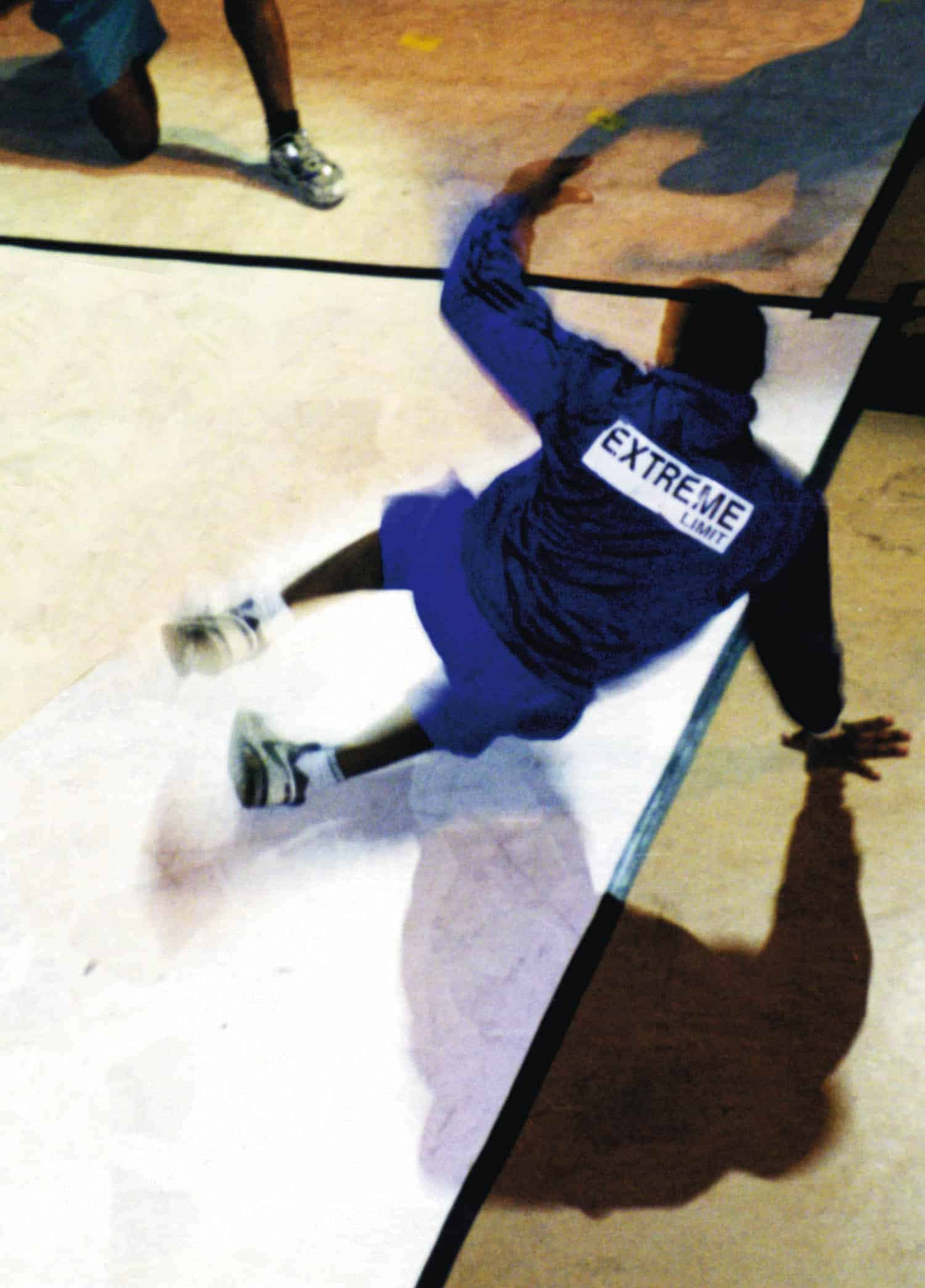
Storm is one of the most well-known breaking dancers in the world.
His power and style have led many to consider him the “strongest b-boy ever” from the standpoint of spins. In fact, to watch him dance is to be literally amazed at the fluidity with which he is able to hook extremely complex powermoves. At a time when it was said that breaking had come to a standstill in its potential to defy the laws of gravity, the great merit of this Berlin-based breaker was to succeed in proving that the creative possibilities of this dance are limitless.
-Tell us about the beginnings of your career and explain to AL Mag. readers why you chose the stage name Storm (storm, ed.).
“I started dancing in 1983. I was doing electric boogaloo, not dancing on the floor yet, although I can't say I was doing real boogaloo. At least I was trying to! Like many others I was just watching what the media was broadcasting in Germany, people like New York City Breakers, Magnificent Force, Rock Steady Crew, the movie Breakin’1. I guess you can imagine what my style was like at the time: I was trying to imitate what they were doing in the videos! Then the media attention began to fade. However, I did not give up and continued to train in an attempt to create my own style. One day I had the opportunity to travel to New York and meet the dancers who had inspired me. And it was in America that I received the nickname Storm. More precisely, it was Quikstep (a member of the New York crew Full Circle, ed.) and Mr. Wiggles (Rock Steady Crew) who gave me the name, on the occasion of a challenge I happened to support. We were in a club, and as I was dancing, a housedancer entered the circle arrogantly. When I got up, in response I gave him a combination-I think flare-windmill-head-and ‘crushed’ him. Once the challenge was over, Quikstep and Mr. Wiggles said to me, ‘Hey, you pounced on him like a storm!’ From that day on, everyone started calling me that. They couldn't remember my name and said ‘hey, where did storm go?’ or ‘what is storm doing tonight?’ So it's not that I chose the name, it was given to me and I like it.”
-You have achieved a level of rotation that in my opinion is unprecedented. How many hours do you devote to training?
“I never danced seriously until I finished school. I generally practiced a minimum of 2 hours a day. Sometimes it was 6, sometimes I didn't practice for days or just half an hour. You know, it's often useless to keep dancing if you don't have the right day. Then, in my opinion, it's much more mental than you think. You train much more mentally, visualizing the movements for example. From a physical point of view, it's not like you can continue for too long when you dance breaking. It's exhausting! Popping and locking are very different. Sometimes I practice popping or locking while my wife and I are shopping at the supermarket. Sometimes she gets irritated and says ’can't you stop for a second at least here?!‘’
-You are a professional dancer. What is your work life like? How do you balance family with this activity that often sees you away from home?
“It would not be possible for me to work any other way. It's my life. I do it 24 hours a day. My wife is just ’exhausted‘ and scolds me for not thinking about anything else. When I go to a place that maybe has no relevance to breaking, I try to draw inspiration from anything I see. Then I try to translate those details into choreography or a step. In general I do shows, I dance in video clips, on the street, in the theater, in clubs, at jams. Of course there are events where you are paid to perform and others where you dance for free.’
-That seems to me to be the minimum. Otherwise it all boils down to a matter of money.
“That's right.”
-But don't you think that b-boys sometimes have to say no, otherwise they don't get taken seriously and paid for a dance that on a spectacular level pockets money for event organizers?
“I agree. Personally, I've learned to be professional in terms of compensation as well. I dance for a certain amount of money and I don't perform for people who don't respect what I do by trying to make fun of me. Rather I dance on the street for personal pleasure. But there are cases and cases. I also believe that what really repays the breaker for his efforts is not money: it's reputation. Also I think you can be the most amazing dancer, but if you are a str*ck, no one will hire you.”
-Staying on the subject of b-boying and engagements, as you know a hornet's nest of controversy was raised after the release of Run DMC's video featuring some breakers challenging each other to rhythms unrelated to Hip Hop. Do you feel, as these people do, that the fact damages dance, or can their criticism be traced to envy?
“I don't think you necessarily have to criticize this behavior, especially when breakers are young and dying to get experiences, get on TV and have a chance to be seen by millions of people. If you are ‘old’ like me, maybe you avoid jobs that, based on your maturity, you don't consider so important. All the criticism that came out after the Run DMC video leaves time for itself. I think that video is very good and it helped breaking. It kind of brought it back to the scene. Definitely on the wrong music, but if a guy gets into it then he will realize that those same b-boys don't dance to those beats.”
-What if an artist from another culture offered you to dance in his clip or do gigs for him, would you accept?
“It depends. Currently I have enough hires, maybe even too many. But if I didn't have enough, rather than go to work in a factory and break my back 8 hours a day, I think I would accept. I don't criticize those breakers, on the other hand I know that one should try to educate young people by also explaining to them what is the right music. It's a delicate situation, but I'm not here to judge anyone.’
-Do you teach?
“Yes I teach a lot. Practically every day. That is, when I train, I give advice to everyone around me.”
-Can you teach them what it means to be a b-boy?
“You can only explain techniques and give advice on how to improve their poise and increase their charisma when they dance. What you can't explain is how to put your heart into it.”
-About charisma, what meaning does this word take on in b-boying?
“It is expressed in a dancer's poise. Some breakers dance with their heads down or disregard the audience, which from a professional point of view is obviously not acceptable. Charisma is manifested in the way they enter the dance floor, the execution of sequences and even the way they leave the circle. Many b-boys don't have any, nevertheless it's not that it's to be condemned, it's just that maybe they don't feel comfortable in certain contexts.”
-I noticed that your steps are very neat and original. Although they don't conform to the style in vogue now (airtrack, bridges, etc.), I found them to be extremely clean and personal, which certainly implies that you spend a lot of time on them. How do you divide a workout between steps, spins and popping?
“I don't organize in the true sense of the word. I just dance. I can tell you that I devote a good part of my training to steps.”
-In fact, it is not true that Storm only does powermoves and that in steps he is not that good....
“It's funny you should say that and I'm glad, because a lot of people think I only do rotations, but I don't. I love steps and I think not doing them limits a breaker tremendously. I like experimenting with new steps as well as dancing popping and locking. This fact also helped me during a difficult time in my life. In fact, there was a time that I couldn't even train anymore because of the pain, as I had hurt my neck spinning on my head. I had almost been in danger of staying there, and unfortunately to this day I still cannot dance like I used to. The first thing I told myself was ‘it's over! I will never dance again!’ Then I began to improve and gradually resumed doing only popping and stepping. Just continuing to dance and not having to stop altogether helped me psychologically, too. I could have gone crazy.”
-Do you think the different styles-popping, locking, electric boogaloo, breaking-can be combined?
“Yes, styles can be blended. For example, I like to combine steps with locking or popping with spins. If you have a little imagination, a whole new style can be born.’
-Don't you think there is an overlooked factor in the execution of rotations, namely rhythm? “That's the point. For me, you can do just powermoves but if you don't do them in time, you're not quite there. Who said only steps have to be done in time? Even a rotation has to be in time! Also you can make your rotations stylistic. You can, for example, customize the flare (think of the gymnastic movement on the pommel horse, ed.). You can make it aggressive, gentle, light or dirty, and make people shout ‘hey, how did you do that?’”
-Do you think steps and rotations are worlds apart? Or is there a relationship between them?
“The relationship is very strong. The windmill is perhaps the most famous move and it originated from footwork. Initially you would start from the steps and do a half rotation on the shoulders and head, it was like a freeze. Then you started repeating this initial push until the movement became continuous turning a footwork into a powermove. You can't really separate them, they are part of the same family.”
-What do you think about the fact that airtracks (air stops, bridges, freeze on elbows, ed.) are so fashionable right now?
“I think a lot of people are copying the Style Elements. There are a lot of videotapes around and people are imitating them in their power-footwork style. It's in fashion now, maybe in a year it will be outdated and breakers will prefer another style completely. Recently I saw Dynamic Breakers’ Spyder dance and the b-boys were impressed. Many believed those moves were new. They actually go back to ”84, but they never lost the charge they had."
-A question you must have been asked a million times: what is required to be a good breaker?
“Heart! Heart and rhythm.”
-No more words are needed, you've made it crystal clear. “The muscles and power will come by themselves by dancing. The heart won't.”
-A personal question: what happened to your Battle Squad group (the crew included in addition to Storm: Speedy, Emilio and Swift, ed.)?
“It still exists. Speedy, my brother, now lives in Frankfurt, is married and has children. We don't see each other very often; after all, he lives 500 km from Berlin. Swift lives near Hamburg, that is 300 km from my city, so it is not easy to meet frequently. Nevertheless, the crew still exists.”
-How come Emilio is no longer part of the team?
“I don't know what to tell you. I think it's too personal to talk about it here in front of a microphone. The only thing I can tell you is that I miss him, I miss him very much.”
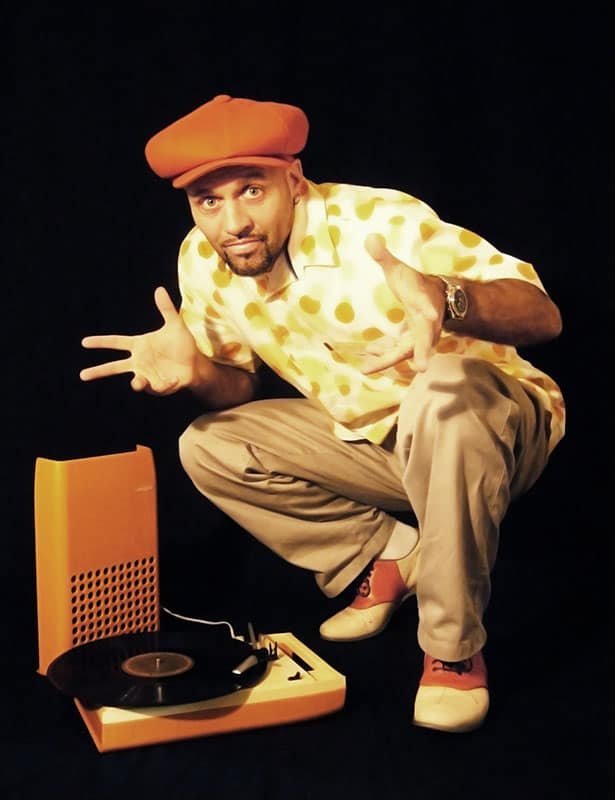
-You have experience that many b-boys cannot claim. You have danced all over the world, met the original b-boys, had the opportunity to learn directly from the creators of Hip Hop many notions that are often foreign to most dancers. Unlike you, the average b-boy does not have the opportunity to engage with those who created Hip Hop and consequently remains in a kind of ignorance. The question is, do you try to pass on ‘for free’ what you've learned, or do you let the kids inform themselves and go at it on their own?
“I've been lucky enough to travel all over the world. Many kids don't have that opportunity, often from an economic standpoint. If I know the correct name of a movement, I teach it, even when I am not asked. Let's say when speaking, I correct b-boys who use the wrong terms. Of course you have to know what you are talking about, otherwise you spread ignorance. However, I think if you really love this dance, you naturally become interested in it. You look for articles, books, talk to the ‘architects’ or simply to b-boys who have much more experience and should therefore be respected and listened to. Ideally, one should have the opportunity to travel and then ask the right questions of the founders while developing knowledge that comes from just talking to them.”
-You hear rumors that your hometown of Berlin is extremely violent and that there are very likely to be fights at a jam if not worse. Is that true?
“I travel a lot and it's been quite a while since I've gone to a jam in Germany since I'm very busy with my shows. Anyway, Berlin is definitely the most violent city in our country, but it's not that different from Paris or London or New York in terms of violence. Berliners often want to look like gangsters. I can't give you an explanation, they do. In fact at jams you always need a lot of security unfortunately.”
-You are married, you don't have an 8-hour-a-day job, you are 29 years old, and you will have to stop sooner or later. How do you see your future? What are you going to do? Will you look for a job like everyone else?
“I have been dancing for 15 years and am a professional dancer. By performing I have made a lot of connections with agencies, etc. I will certainly remain in the scene in some way, perhaps organizing events or managing the organization of performances. For the time being, I don't pose the problem to myself even though I will be turning 30 soon. There is always a chance to make money. If you have ideas and skills and believe in yourself, the money will come somehow. This does not work in terms of Hip Hop worldwide, because certain scenes are still small. In Europe, however, things are different. The Hip Hop scene is growing every day, so there is a greater likelihood of working in the industry.”
-I know you currently do a lot of gigs in German and European theaters, clubs, discos. Tell us about this experience.
“It is a real tour called Storm and Jazzy Project. We usually perform in theaters, but also in nightclubs or squares. It is a 20-minute show that includes various popping, locking and b-boying choreography.”
-Are there only b-boys among the spectators or also people from outside Hip Hop?
“Mostly regular people, although there is the presence of many b-boys. These are usually curious people who like dance in general.”
-I observed you in the circle and noticed that you are very helpful to all b-boys whether they are strong or novice. Unlike you some dancers do not even give a glance to those who are not sufficiently good and prepared. What do you think of this attitude?
“I think these people have big problems. They've been beginners, too; we've all been beginners.”
-You toured Italy for a well-known drink. How was the show organized?
“It was a few years ago. I was in Italy for 2 weeks. I was doing 2 shows a day of 5 minutes each. I was earning very good money. It was a good experience and in my free time I also had the opportunity to meet Italian b-boys and train with them, although sometimes it was difficult to understand each other because we spoke only in English.”
-Ed your English is extremely clean, I think that has also helped you in your career. You speak better English than most language graduates I know.
“I thank you. True, that helped me too, although I learned more by traveling than in books. However, the language that allowed me to communicate even when my English was poor was the language of dance.’
JOIN THE PRIORITY LIST
Break boundaries

Break boundaries




 Italian
 English