Writers’ block by Phase 2 no. 37
About Phase 2
AL 37 June 1999
STYLE...CONNECTIONS, ARROWS, ORNAMENTS...AND THEIR FORGERY
THE TECHNIQUES.
Style--we ask the question once again--what is style? Let's go straight to the core...it's the substance that trends are made of...it's something eye-catching, something that inspires deeply, something that once it starts will get people talking about it and it will be followed by people...now we get right to the climax...fashion is a place you stay in for a moment...style is a place you reach after you get kicked in the butt and you stay there forever. Style stays with you...because you are you...Charlie Chaplin (the reggae star) made a song called “Style & Fashion” (“Style And Fashion,” ndt); fashion is nothing without style...because style rules! Now let's talk about the technical part as we let these dishes get washed...and we'll take the thing apart just as if it were a car.
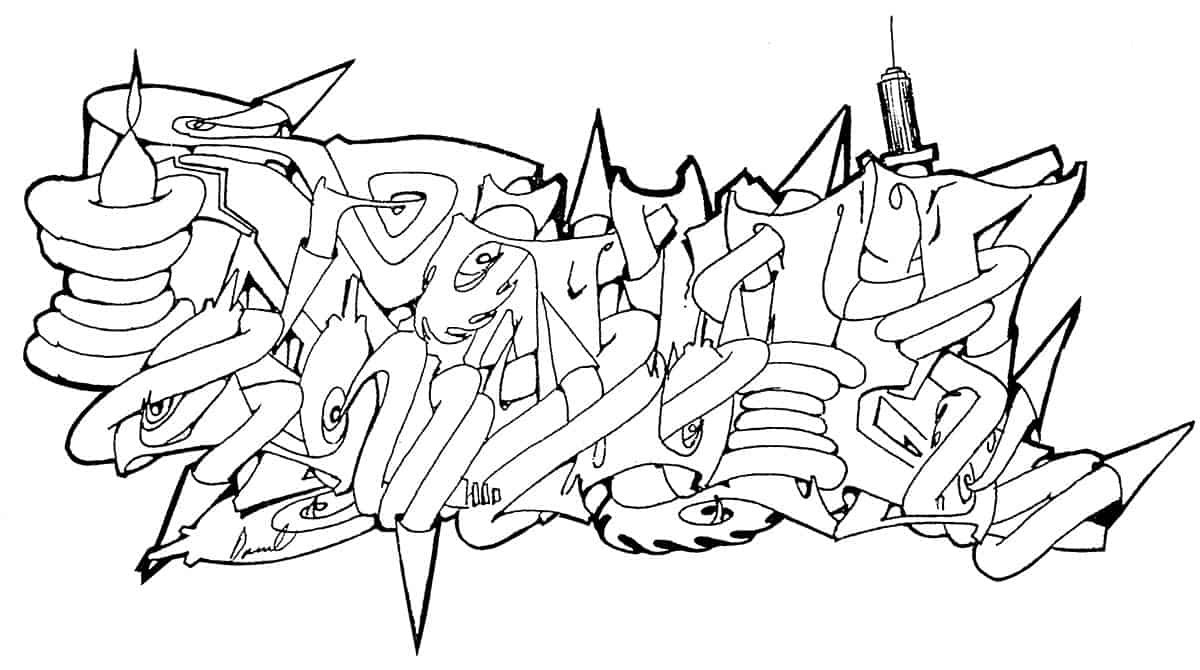
Sticking to the concept of ‘style and fashion,’ we could use a pretty girl as an example, although I will be accused of masochism. However...imagine...if Naomi Campbell had a walk like Frankenstein's. She would need some lessons. Everyone would say, ‘she's so beautiful ... but that walk needs to make it go away!’ Style? A cool hat, a cool maxi jacket ... those amazing shiny, tight-fitting T-shirts? You've lost! Tell me what happened to the pants Prince always wore?
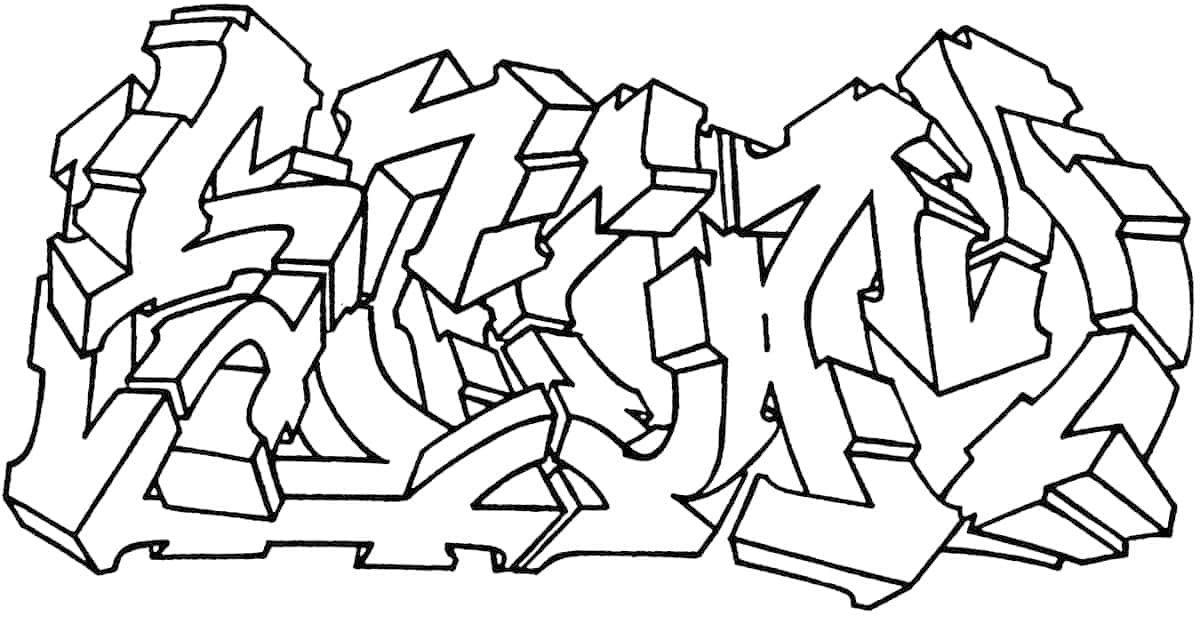
You see, arrows have become a foundation of style--but they are still in fashion. Yet putting them in/on your piece will not be enough to make it work. When we talk about ‘style’ in aerosol ... it is equivalent to saying ‘what works.’ That is why fashion has no meaning without style. Those who can recognize when something ‘looks like but isn't’ can spot writers who make use of crazy colors, as well as those ‘things’ that pop out of their pieces giving the illusion of complexity when in fact it is the color scheme that makes their letters look that way (i.e., like they are complicated). You can't say there is no style, but if we want to talk ‘on another level’ it is what we call ‘phony stuff’. A compadre of mine said of those pieces that the only things in wild were the first and last letters, while the rest consisted of mediocre characters with decent taste but no intensity covered so by those colors. Kind of like those guys in sequin shirts accompanied by horrible pants and absurd jackets....
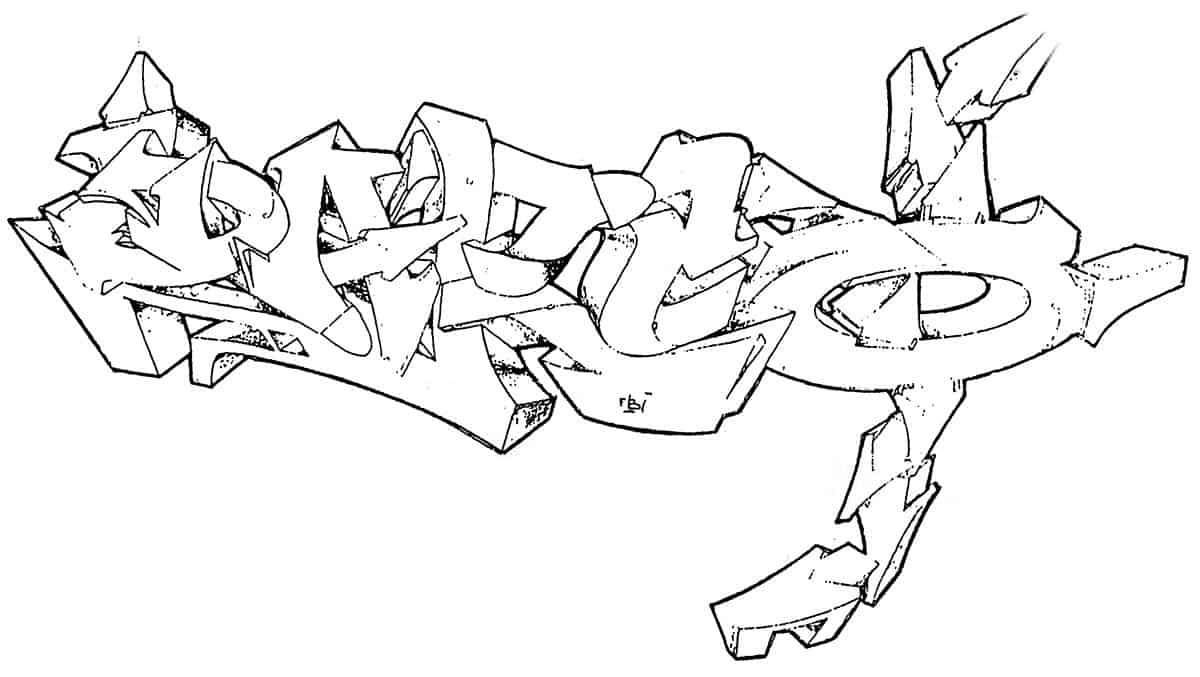
Last time we talked about techniques, and now we will look at them all together. First keep one thing in mind: arrows, ornaments and connections are not synonymous with style. Exquisite technical skills and mastery of caps and canisters do not equalize style, but a combination of the elements mentioned above can make one's style efficient. Before I continue I would like to say that all of this was evaluated after gaining experience and contact with the style and after making lettering a profession... ‘infinite’ are the boundaries, but within the boundaries of infinity there are technical fundamentals such as ‘a straight line cannot be curved.’ All these are things that come from experience and the eye (yes the third eye once again) and that everyone can reach once you bring them to their attention. It is not automatic that all third eyes see the same thing, but eventually most will understand the totality of the science that governs a style ‘within’ this infinity. We can hate a style or love it--but that does not necessarily alter its quality.
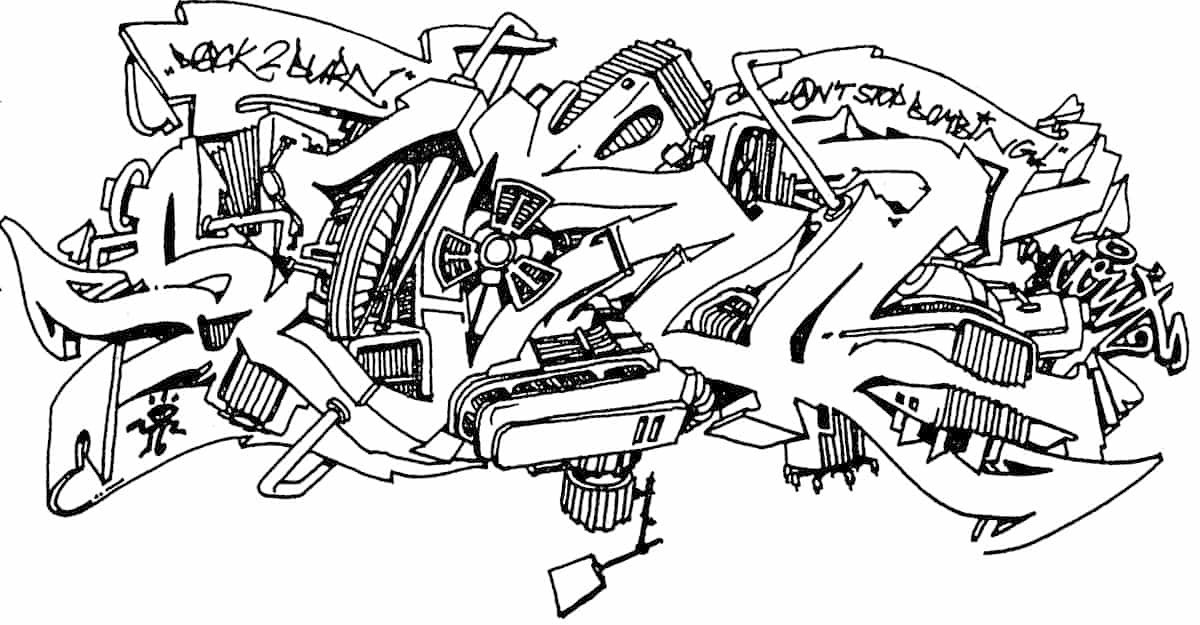
In order to be a ‘connoisseur’ (you know the word) the imperative starting condition must be to ‘know your stuff’! Do not allow those who utter the word ‘style’ to do so without knowledge. They may be fakes. The decorations were originally part of the signatures and not the pieces and could be returned to the signatures with the ‘signature style as a piece’...but not as if it were a definitive idea or concept that goes against the grain regarding the details that were once used for the pieces. Take note that in the beginning there were no definite patterns. In the late 1970s and early 1980s, writers began to have more material to refer to and thus a better idea of possible directions to take. With the pieces, connections and arrows merged and started a style that later became a fashion with its own style. It was quite easy to see that this concept could be carried forward, so these features became multiple. And now we will go back to find out how these conditions do not necessarily determine the success of a good piece.

One thing you'll notice about arrows is that they always tend to have a position that can give the piece a sense of movement...they can flow from left to right, but if that kind of approach is lacking, you should still make sure to distribute them evenly along the piece. Nowhere is it written that they have to go from left to right...but this is where style takes over to complete the fashion. Arrows were not ‘invented’ for the purpose of having a specific function, they are a concept that began for the simple reason that it was something that could be done, and it was. Once arrows were conceived, mistakes and experiments in their implementation led to the realization that their use, as well as their placement, offered infinite variations. It is conceptual.
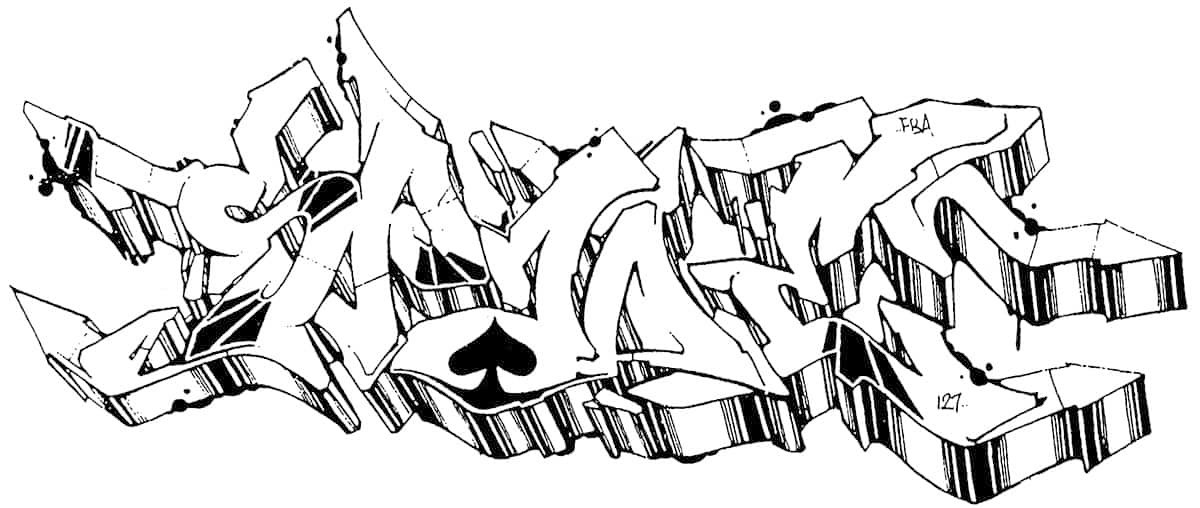
In the beginning they were conceived and introduced as arrows and dots--and they were blunt, not sharp. A famous New York City writer was quick to point out the fact that: ‘because there's nobody out there actually doing anything, the ‘dull stuff’ is considered great.’.
My belief is that if the writers took this stuff to another level, other (younger) people would be able to distinguish ‘exquisite’ from ‘well done.’ The bomb has been fired and it explodes. A million twists and circles and two thousand arrows do not indicate that you have made it. You can take two complex pieces of the same writer and see why one works and the other doesn't make it. Maybe it was because he had made it too complicated, breaking the harmony and continuity. Maybe the color scheme didn't work and ruined the whole thing. Maybe a normal person can't discern these details because their standards are still based on ‘similar to’ or ‘different from’...people who don't do writing and don't know anything about what writers consider ‘The Magnificent.
No matter how good one is technically, style and uniqueness of style depend on the eye, the ability to understand forms, and imagination.
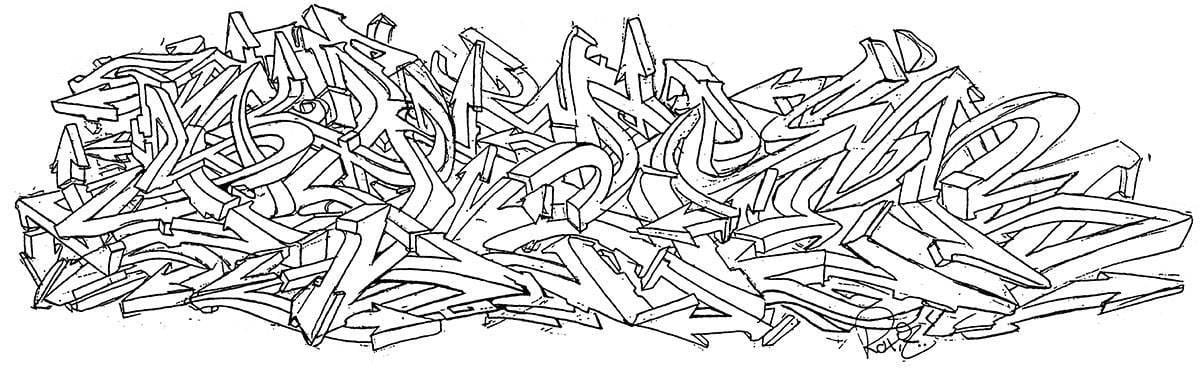
It's about instinctively figuring out how to flow, how to direct the stroke, how to connect arrows, how to join letters, pipes and lines, and consequently it's something that some people ‘have’ while others definitely don't. Technically a piece is the only self-clarifying example.
Obviously you can't be like the professors and point out all the inaccuracies why one piece doesn't work compared to another, it all goes way beyond the standards. This is a fact of life. It's kind of like singing off beat. Does one go off beat just because we are programmed to believe we know what it means to be ’on beat’? Or is it simply an instinct that ‘compels’ one to go off beat? Do you think any of this is debatable? What is a wildstyle piece that ‘makes sense’? Arrows that flow every where versus arrows that can't move. If you take into consideration most of the pieces, for which I will vouch myself that they are made without precise study, you will find that this approach has been assimilated. For example, as I said before, arrows usually start from the left and end on the right. They can go upward, downward and in some other direction, but they can't just wander off anywhere. If that were the case ... everyone would be able to be stylistic ... you couldn't talk about pieces because there would be no basis on which to discuss the quality, competence, and compactness of a composition.
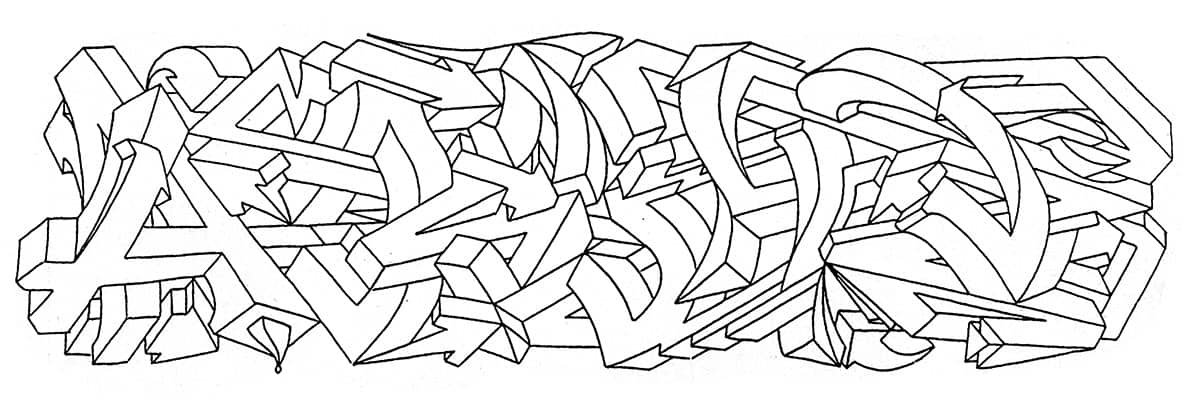
I think this conversation may never end.
The experience of the mind's eye is the best teacher. Ornaments are materials that if not used with the proper knowledge of how best to work them out...will never make you successful. In a realm in which the blind can agree with our beliefs, ‘style’...though it is what you make it to be...is not always ‘doing it,’ not without proper understanding of its dynamics. Even a new style that can break the link with ‘origins’ must necessarily possess ‘something’ that makes it... cool... that gives it wings... and its possessor will have to have the ability to absorb this reality... Opinion?
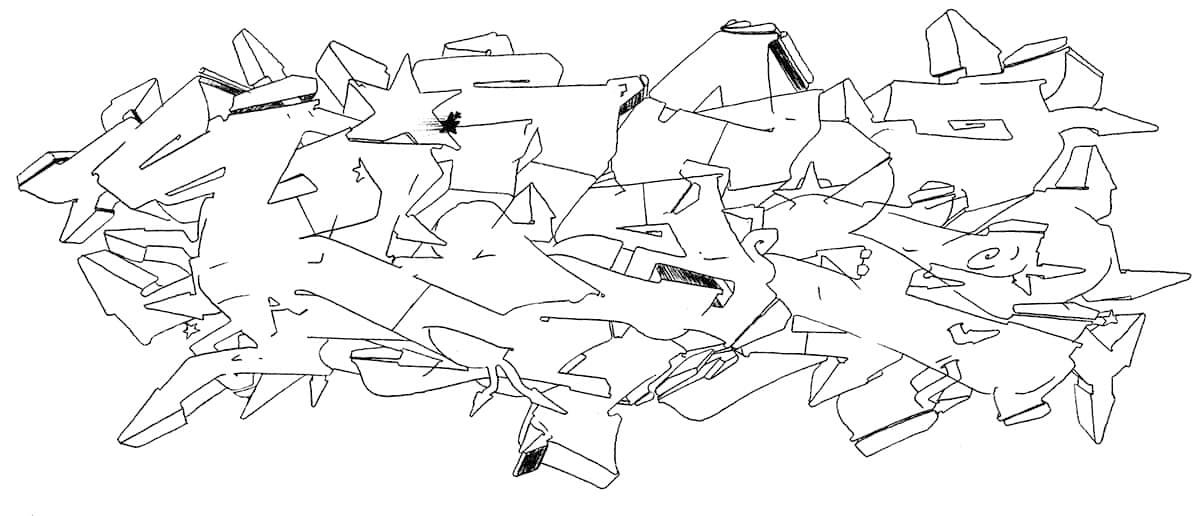
Call it what you will... ‘style’ is what you make of it and what you make of it speaks for itself... Imagine if we were talking seriously... or if we were just filling these pages to drive you crazy in the meantime... send us some of your stuff and stop being shy. Without trying to have the last word on the matter we will try to point out what you are missing...assuming you have the balls to put your stuff in the line of fire...
JOIN THE PRIORITY LIST
Break boundaries

Break boundaries




 Italian
 English